

Last week, we explored how life may have originated from non-living chemicals. If you haven’t read it yet, check out the link here.
This week, scientists may have uncovered another piece of the origin-of-life puzzle.
Scientists believe life may have originated near deep-sea hydrothermal vents. They are mineral-rich environments often described as the primordial soup of early Earth.
One key ingredient in biochemistry is phosphate. Phosphate is one of the unsung heroes of life. It forms part of DNA and RNA, helps link nucleotides together, and stores energy in molecules such as ATP. Without phosphate, modern life would be impossible.
The challenge is that phosphate is not particularly reactive in water. Scientists have long wondered how early Earth chemistry managed to incorporate phosphate into the first biological molecules.
A Modern Microbe Gave Us a Clue
The breakthrough came from an unusual bacterium discovered near Venice, Italy. This microbe can convert phosphite into phosphate and use the released energy to produce ADP, a key molecule involved in cellular energy transfer.
In 2023, researchers began characterizing the enzymes responsible for this process. This led William Martin and his team to an intriguing idea: perhaps, before enzymes existed, metals present in hydrothermal vent rocks performed a similar role. They may have captured the energy released during the conversion of phosphite into phosphate and used it to drive the formation of biologically important molecules.
A Journey Back Four Billion Years
The researchers identified several metals capable of catalyzing these reactions, including nickel, platinum, and palladium.
Palladium was particularly interesting because it helped attach phosphate to important biomolecules such as ribose (the sugar found in RNA and DNA) as well as glucose, AMP, creatine, and acetate.
Why Hydrothermal Vents Matter
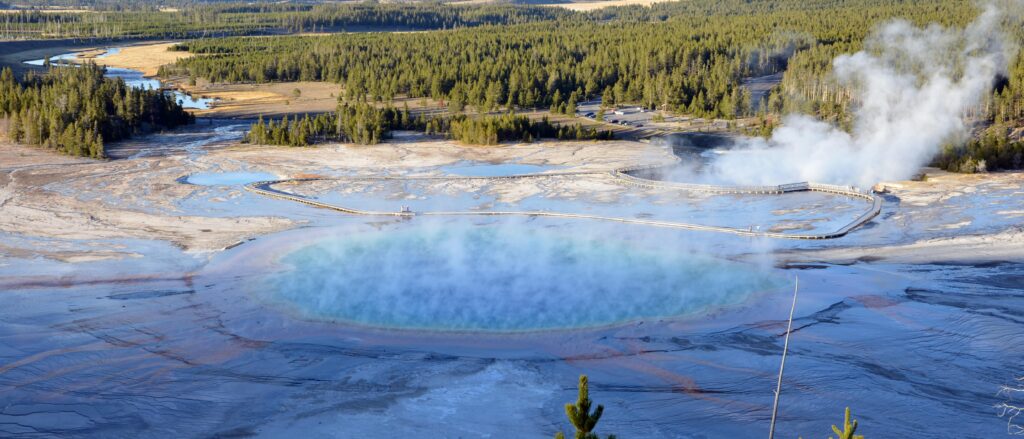
Hydrothermal vents provide more than just heat. When seawater reacts with iron-rich rocks from Earth’s mantle, large amounts of hydrogen are produced, creating a potential energy source for early life.
These vents are also rich in metals such as nickel and palladium. In other words, they may have supplied the ingredients, energy, and catalytic surfaces needed to weave phosphate into the chemistry of life.
Does This Explain the Origin of Life?
Not entirely. The study does not explain how the first cell appeared. Instead, it helps fill one of the many missing steps between simple chemistry and living systems.
Other Origin-of-Life Theories
Scientists have proposed several other ideas to explain how life emerged:
- Activated phosphate hypothesis: Compounds such as diamidophosphate (DAP) may have helped join nucleotides into the first RNA molecules.
- RNA World hypothesis: Before DNA and proteins existed, self-replicating RNA molecules may have carried both genetic information and catalytic activity.
- Mineral nanozyme hypothesis: Naturally occurring mineral nanoparticles may have acted as early catalysts, driving the formation of increasingly complex organic molecules.
- Cooperative RNA networks: Laboratory studies suggest that simple RNA molecules can form self-sustaining networks, providing a possible bridge between chemistry and biology.
Every year, scientists uncover another small piece of the origin-of-life puzzle. This latest study suggests that ordinary metals hidden within ancient hydrothermal vents may have helped transform phosphate into a biologically useful form long before the first cells appeared.
The origin of life remains one of science’s greatest mysteries. But with every new discovery, the picture becomes a little clearer.