
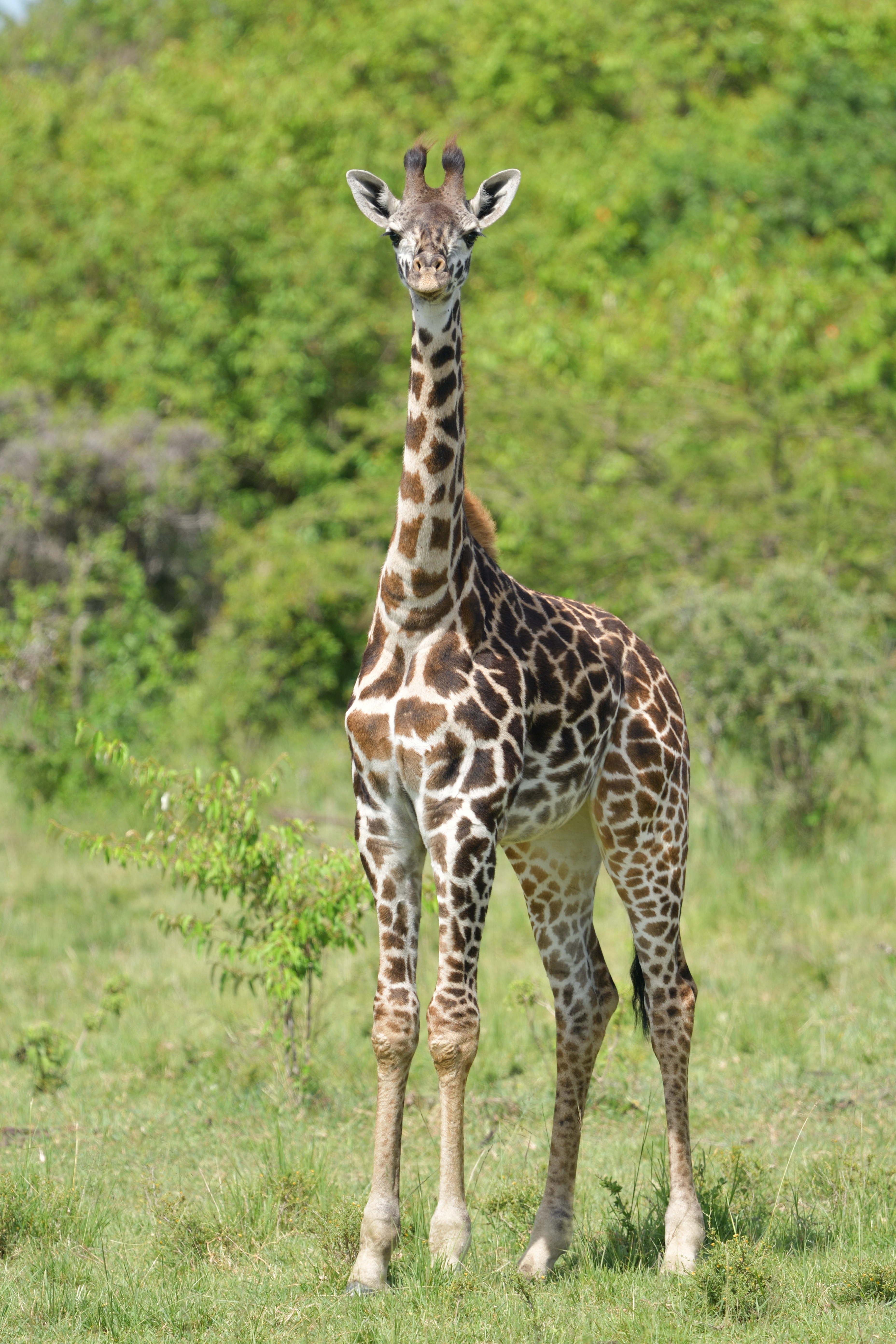
In the previous articles of this series, we explored how continental drift shaped Earth’s biodiversity, how Charles Darwin explained evolution through natural selection, and why “survival of the fittest” is about reproductive success rather than physical strength.
But what about Jean-Baptiste Lamarck, the French naturalist whose ideas came before Darwin? Was he completely wrong, or has modern biology changed the way we view his theory?
For over a century, biology textbooks dismissed Lamarck’s explanation of evolution. However, recent discoveries in genetics and epigenetics have sparked an important question: Was Lamarck wrong about everything, or was he simply ahead of his time?
Lamarck’s Original Theory
Jean-Baptiste Lamarck was the first scientist to propose a comprehensive theory explaining how species evolve over time. His theory – Lamarckism, suggested that organisms adapt to their environment through the inheritance of acquired characteristics.
According to Lamarck, physical changes acquired during an organism’s lifetime could be passed on to its offspring. His theory was based on two key ideas:
- Use and disuse: Frequently used organs become stronger and more developed, while unused organs gradually weaken.
- Inheritance of acquired characteristics: These acquired changes are then inherited by the next generation.
Although his proposed mechanism was later shown to be incorrect, Lamarck deserves credit for challenging the long-held belief that species were fixed and unchanging.
Why Was Lamarck’s Theory Rejected?
Lamarck’s theory faced criticism because it lacked an experimental evidence and a biological mechanism explaining how acquired characteristics could alter hereditary information.
Several classic experiments tested his ideas.
Weismann’s Mouse Experiment
German biologist August Weismann cut the tails of mice for more than twenty consecutive generations. If acquired traits were inherited, later generations should have been born with progressively shorter tails. Instead, every generation developed normal tails.
The Dark-Room Fruit Fly Experiment
Scientists also bred fruit flies (Drosophila) in complete darkness for more than sixty generations to determine whether disuse would cause their eyes to disappear. The offspring continued to develop fully functional eyes.
These experiments demonstrated that changes acquired during an organism’s lifetime do not permanently alter the hereditary information passed to offspring.
Darwin’s Better Explanation
When Charles Darwin introduced the theory of natural selection, he provided the missing mechanism that Lamarck’s theory lacked.
Rather than organisms changing because they needed to adapt, Darwin proposed that populations already contain naturally occurring heritable variations. Individuals possessing advantageous traits are more likely to survive and reproduce, gradually making those traits more common over generations.
This evidence-based explanation became the foundation of modern evolutionary biology.
Neo-Lamarckism and the Role of Epigenetics
Although Lamarck’s original mechanism has been rejected, modern biology has revealed an interesting twist.
Environmental factors such as diet, stress, toxins, and temperature can influence gene expression through epigenetic mechanisms like DNA methylation, without changing the underlying DNA sequence. In some cases, these epigenetic changes can persist for one or more generations.
These discoveries have led scientists to revisit some aspects of Lamarck’s ideas, giving rise to discussions on Neo-Lamarckism.
However, this does not mean that Lamarck’s original theory has been proven correct. Epigenetic inheritance is generally limited and does not replace the central role of genes and natural selection in evolution. Instead, it adds another layer of complexity to our understanding of inheritance.
So, was Lamarck completely wrong?
Not entirely.
Although his proposed mechanism of inheritance did not withstand experimental testing, Lamarck recognized that species are not fixed and that the environment plays an important role in shaping living organisms. Darwin later provided the mechanism through natural selection. Modern genetics and epigenetics have further refined our understanding of how evolution works.
Over the past four articles, we’ve explored the foundations of evolutionary biology: from the drifting of continents that reshaped Earth’s landscapes to the mechanisms that drive evolutionary change. We discovered how continental drift created geographic isolation, how Darwin’s theory of natural selection explained evolution, why “survival of the fittest” is really about reproductive success rather than physical strength, and how modern genetics and epigenetics have reshaped our understanding of Lamarck’s ideas.
Together, these concepts reveal that evolution is not the result of a single event or force, but the outcome of countless interactions between Earth’s changing environment, genetic variation, natural selection, and inheritance over millions of years.
The greatest lesson from this series is that science is never static. Every new discovery builds upon earlier ideas, refining our understanding of the natural world and bringing us closer to uncovering the remarkable story of life on Earth.
This concludes Part I: Foundations of Evolution.
Next week, we’ll begin Part II: From Species to Humans, where we’ll explore how new species arise, why sexual selection shapes evolution, and trace the fascinating journey of human evolution from our earliest ancestors to the migrations that populated the world.