
Why are kangaroos found only in Australia? Why do fossils of the same extinct organisms appear on continents separated by vast oceans? And how did Earth’s geography influence the evolution of life itself?
The answers to these questions lie beneath our feet in the slow movement of Earth’s continents over millions of years.
Long before humans walked the Earth, the continents we know today were joined together as one enormous landmass. As they gradually drifted apart, they reshaped climates, isolated populations, and created new environments. These geological changes became one of the driving forces behind evolution, influencing where species lived, how they adapted, and why entirely new species emerged.
This idea is known as the Continental Drift Theory.
What is Continental Drift?
It is the scientific theory that Earth’s continents slowly move across the planet’s surface over millions of years.
The theory was proposed in 1912 by the German meteorologist and geophysicist Alfred Wegener. He suggested that the continents were once joined together and gradually drifted to their present positions.
Although Wegener correctly proposed continental movement, he could not explain the mechanism behind it. The theory gained widespread acceptance only after the discovery of plate tectonics in the 1960s.
Pangaea: The Supercontinent
Around 240–250 million years ago, nearly all of Earth’s landmass formed a single supercontinent called Pangaea (meaning “all Earth”).
Pangaea was surrounded by a vast global ocean known as Panthalassa.
Approximately 200 million years ago, Pangaea began to break apart into two major landmasses:
- Laurasia (Northern Hemisphere)
- Gondwana (Southern Hemisphere)
Over millions of years, these landmasses fragmented further to form the modern continents we know today.
Evidence Supporting Continental Drift
Several independent lines of evidence support Wegener’s theory.
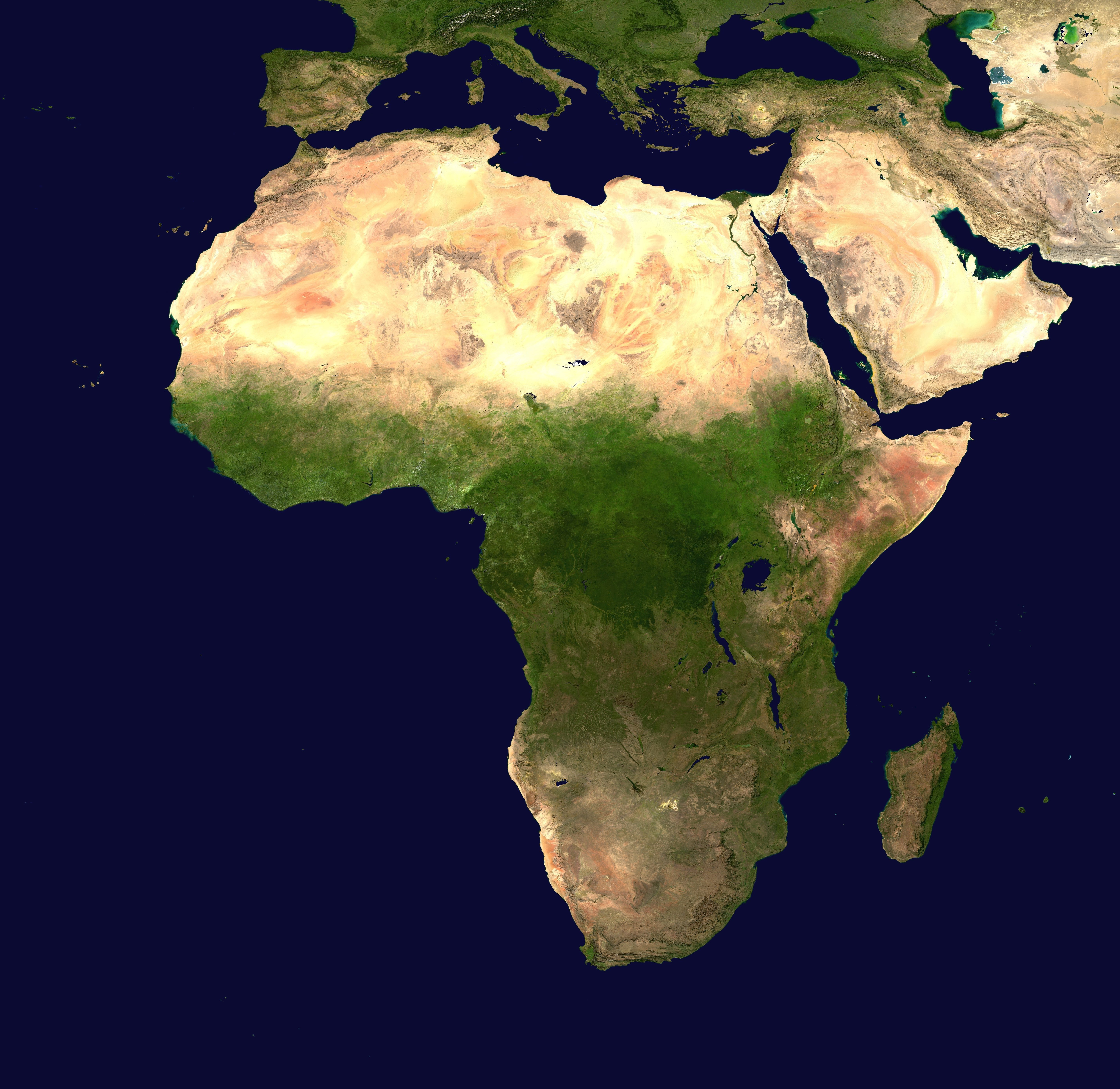
1. Matching Coastlines: The east coast of South America closely matches the west coast of Africa, suggesting that the two continents were once connected like pieces of a puzzle.
2. Fossil Evidence : Identical fossils of extinct organisms have been discovered on continents now separated by thousands of kilometres of ocean. Examples include: Mesosaurus ( a freshwater reptile found in both South America and Africa), Glossopteris (an extinct seed fern found across South America, Africa, India, Antarctica, and Australia). Since these organisms could not have crossed vast oceans, their distribution strongly suggests that the continents were once joined.
3. Matching Rocks and Mountain Ranges : Geologists have found rock formations of the same age and composition on opposite sides of the Atlantic Ocean. Similarly, mountain ranges in eastern North America align with those in western Europe, indicating they were once part of a continuous geological structure.
4. Glacial Evidence Ancient glacial deposits and scratch marks are found in present-day India, Australia, South Africa, and South America. These regions now lie in warm or temperate climates, but the glacial evidence indicates that they were once clustered together near the South Pole as part of Gondwana.
Plate Tectonics: How Do Continents Move?
Today, continental movement is explained by the Theory of Plate Tectonics. The Earth’s outer shell (lithosphere) is broken into large rigid tectonic plates. These plates float over the semi-fluid asthenosphere, which is part of the upper mantle. Heat generated inside the Earth creates convection currents within the mantle. These currents slowly move the tectonic plates at an average rate of 2–10 cm per year. As the plates move, continents drift, oceans open and close, mountains form, and earthquakes and volcanoes occur.
How Continental Drift Influenced Evolution and Biodiversity Continental drift has shaped the history of life on Earth?
1. Geographic Isolation: When continents split apart, populations that were once connected became geographically isolated. With no exchange of genes between them, each population evolved independently. This process, known as vicariance, is one of the major reasons for allopatric speciation.
2. Formation of New Species: Separated populations experienced different climates, predators, food sources, and environmental pressures. Over millions of years, mutations accumulated, natural selection acted on these variations, and reproductive isolation eventually led to the formation of entirely new species.
3. Changing Environments drove Evolution. As tectonic plates shifted across different latitudes, they altered:
- Global climate
- Ocean circulation
- Rainfall patterns
- Sea levels
- Volcanic activity
These environmental changes created new habitats while eliminating others, driving large-scale evolutionary change and, in some cases, mass extinctions.
4. Convergent Evolution: As different continents drifted into similar climatic conditions, unrelated organisms evolved similar adaptations to survive in comparable environments. This phenomenon is known as convergent evolution. For example, succulent plants evolved independently in African deserts and American deserts despite belonging to different evolutionary lineages.
5. Adaptive Radiation and Endemism: When continents became isolated, organisms diversified to occupy newly available ecological niches. This process, called adaptive radiation, produced many unique species found nowhere else on Earth. Examples include:
- Marsupials in Australia
- Lemurs in Madagascar
- Darwin’s finches in the Galápagos Islands
These isolated species are described as endemic, meaning they occur naturally in only one geographic region.
Why is Continental Drift Important in Evolution?
Continental drift explains many biological patterns that cannot be understood through natural selection alone. It helps explain:
- Why closely related species occur on continents now separated by oceans?
- Why fossil distributions span multiple continents?
- How geographic isolation promotes speciation?
- Why certain regions possess exceptionally high levels of endemic biodiversity?
- How Earth’s changing geography has continuously influenced the evolution of life.
Continental drift provides the geographical framework that helped shape the evolution of life on Earth. By separating populations, altering climates, and creating new habitats, the movement of continents set the stage for genetic divergence, speciation, and the extraordinary biodiversity we see today.
Although continental drift explains where and why populations became isolated, it does not explain how they evolved into new species. That question remained unanswered until Charles Darwin proposed one of the most influential ideas in biology: natural selection.
In the next article of our Evolution Series – Part I: Foundations of Evolution, we’ll explore Darwin’s revolutionary theory of natural selection and discover how small, heritable variations can gradually give rise to the incredible diversity of life on Earth.
Coming Next: Natural Selection: Darwin’s Theory of Evolution