
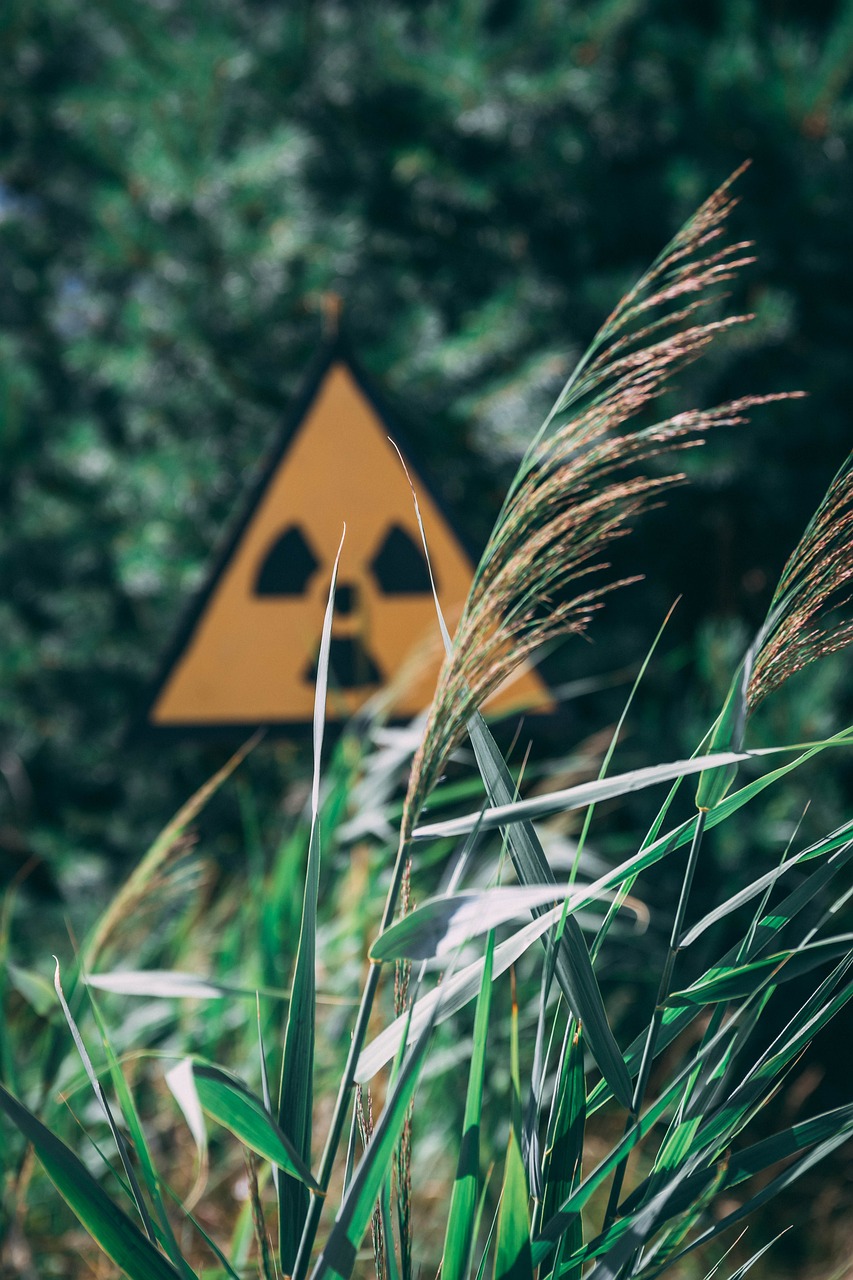
Radioactive Emergency- a gripping Netflix series and its science stayed with me long after the credits rolled. Here are a few aspects of the series that excited the science enthusiast in me [without much spoilers!].
An invisible threat
Most of the characters who came into contact with the mysterious white powder had no idea it was radioactive or that it could cost them their lives. In the series, the powder even appears to glow an eerie blue in the dark, making it seem more fascinating than frightening. But beneath its appearance lay a deadly reality.
Radioactive materials are dangerous because they contain unstable atoms. As these atoms undergo radioactive decay, they release ionizing radiation in the form of high-energy particles or electromagnetic waves. This radiation has enough energy to knock electrons off atoms and molecules, damaging cells and the DNA inside them. If the damage is severe or cannot be repaired correctly, it can lead to cell death, radiation burns, cancer, or even acute radiation sickness, many of which are portrayed in the series.
Internal Contamination vs. External Exposure
The health effects of radiation depend not only on the radioactive material itself but also on how it interacts with the body.
Internal contamination occurs when radioactive substances are inhaled, swallowed, or enter the body through a wound. Once inside, they continue emitting radiation close to organs and tissues, increasing the risk of long-term health problems such as leukemia and other cancers.
External exposure occurs when radiation from a radioactive source outside the body passes through the skin. Depending on the type of radiation, the dose received, and the duration of exposure, it can cause skin burns, nausea, hair loss, acute radiation syndrome, and damage to internal organs.
Perhaps what makes radiation especially frightening is its invisibility. You can’t see it, smell it, or feel it. In the midst of a radiological emergency, people are left wondering: Have I been exposed? How much radiation did I receive? Could I have unknowingly exposed someone else? That uncertainty alone can fuel fear even before the science provides answers.
Speaking of answers- a common medication to tackle the radiation effects was Prussian blue
The blue pigment that saved lives
Prussian Blue has a remarkable history of its own. (It’s too interesting to fit into this article, so I’ve linked a video if you’d like to learn more- after you’ve finished reading this blog, of course!)
Prussian blue is a complex made of cyanide and iron, with both of them being tightly bound to each other. It is non-toxic to humans. It is an FDA-approved medication in radioactive emergencies, as it binds to cesium and thallium and prevents them from being absorbed by the gastrointestinal system and forcing their elimination from the body.
Long before Prussian blue found its way to the medicine cabinets, Prussian Blue was widely used as a deep blue pigment in paintings, textile dyes, printing inks, and even laundry products. It wasn’t until October 2003 that the U.S. Food and Drug Administration (FDA) approved it as a treatment for radioactive cesium and thallium contamination.
It’s nice how a compound once valued for its color eventually became a medicine capable of saving lives during radiological emergencies. Science has a remarkable way of finding new purposes for old discoveries.
When Doctors Have No Perfect Choice
One aspect of the series that particularly resonated with me was the difficult decisions the doctors had to make.
Although Prussian Blue is an established treatment for radioactive cesium contamination, it wasn’t enough for many patients who had received extremely high doses of radiation. For those with severe exposure, no guaranteed treatment could reverse the damage already done. Every passing hour meant further deterioration of their condition.
That left the medical team facing an impossible question: Should they continue with the standard treatment, knowing its limitations, or should they try an investigational drug that had not yet completed the clinical trial process?
This is where medicine extends beyond textbooks and treatment guidelines. In life-threatening emergencies, physicians sometimes have to balance the potential benefits of an experimental therapy against its unknown risks. The decision isn’t simply about whether a drug might work. It’s also about ethics, patient safety, informed consent, and the level of scientific evidence supporting its use.
As someone with a background in clinical research, I found this part of the series especially compelling. It beautifully captured the ethical dilemmas that can arise when science, medicine, and time collide. While the average viewer might see it as another dramatic plot point, clinical researchers and healthcare professionals will likely appreciate the complexity behind such decisions.
When Fear Spreads Faster Than Radiation
One of the biggest takeaways from Radioactive Emergency was the fear that followed it.
The series beautifully portrays how a radiological emergency can quickly spiral into a public health crisis driven by uncertainty. Questions begin to flood people’s minds: Is the drinking water safe? Have I been contaminated? Could I unknowingly expose my family? Is it safe to stay here?
When people don’t understand an invisible threat, fear naturally fills the gaps. In the series, this fear even led people to avoid victims and oppose the burial of those who had died, believing they would continue to spread contamination. While such reactions are understandable, they often arise from misinformation and a lack of clear communication.
This is where science communication becomes just as important as medicine. During a crisis, people don’t need pages of technical reports or radiation dose charts. They need clear, honest explanations in language they can understand. Explaining what is dangerous, what is safe, and what precautions are actually necessary can help reduce panic while empowering people to make informed decisions.
Watching Radioactive Emergency reminded me that science isn’t confined to laboratories, it unfolds in hospitals, communities, and moments of crisis. The series reinforced why making science understandable is just as important as making scientific discoveries. Because when people understand, they respond with knowledge instead of fear.
Interesting read, thanks for sharing.