
When we call an animal indestructible, we don’t mean invincible.
We mean organisms that can survive conditions that should kill them- extreme heat, crushing pressure, radiation, starvation, fire, freezing winds, and even aging itself.
From microscopic life forms that shut down their metabolism to birds that endure Antarctic winters without food, these animals prove one thing:
Survival is written in biology and perfected by evolution.
Let’s meet nature’s toughest survivors, backed by science.
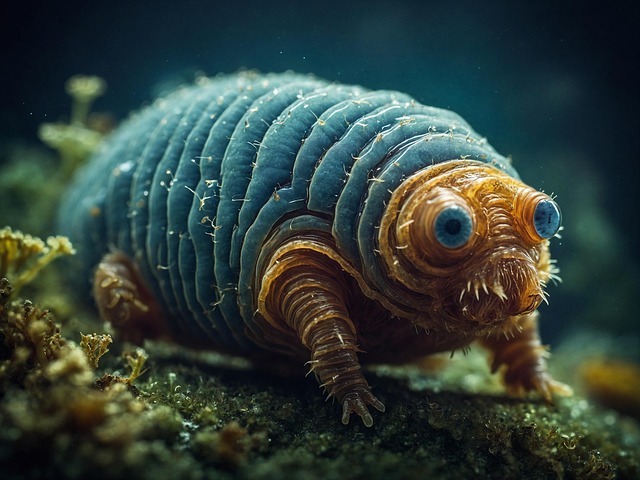
1. Tardigrade (Water Bear)
Scientific name
Ramazzottius varieornatus / Hypsibius dujardini
What can they survive?
Tardigrades can survive some of the most extreme conditions known to life, including:
- Radiation levels found in outer space
- Extreme heat and crushing pressure near deep-sea volcanic vents
- Temperatures close to absolute zero
- High-velocity impact, including being fired from a gun at nearly 2,000 miles per hour
Why can they survive?
Tardigrades survive by entering an extraordinary state called cryptobiosis.
In this near-death state, they shut down almost all metabolic activity, retract their legs, and curl into a compact form called a tun. They completely dehydrate themselves, while specialized proteins protect their DNA and cellular structures from damage.
When conditions improve, they rehydrate, restart metabolism, and continue life as if nothing happened.
2. Planarian Worm

Scientific name
Schmidtea mediterranea
What can they survive?
Planarian worms can survive severe physical injury, including being cut into multiple pieces, each capable of regenerating into a complete organism.
Why can they survive?
Planarians possess extraordinary regenerative biology that makes them functionally almost immortal.
They can regenerate and maintain telomeres, the protective ends of chromosomes that normally shorten with age and lead to cell death.
Their bodies are packed with pluripotent stem cells, allowing continuous tissue renewal. When injured, they undergo dedifferentiation, where mature cells revert to a stem-cell state and rebuild lost tissues, organs, and even the brain.
3. Immortal Jellyfish

Scientific name
Turritopsis dohrnii
What can they survive?
The immortal jellyfish can survive physical stress, injury, and aging by repeatedly restarting its life cycle. Under ideal conditions, it can escape biological aging indefinitely.
Why can they survive?
This jellyfish survives through a rare process called transdifferentiation.
When stressed or injured, it shrinks into a blob, reabsorbs its tentacles, loses its ability to swim, and settles on the ocean floor. Over the next few days, its adult cells transform into juvenile cells, allowing it to revert to its polyp stage and begin life again.
It is biologically immortal- but not invincible. It can still be eaten by predators or die from disease.
4. Cockroach

Scientific name
Periplaneta americana
What can they survive?
Cockroaches can survive radiation levels far higher than humans, extreme pressure (up to 900 times their body weight), harsh temperatures, and severe physical injury, including limb loss.
Why can they survive?
Cockroaches combine physical resilience with remarkable genetic adaptability.
Their slow cell division makes them less vulnerable to radiation damage. A tough yet flexible exoskeleton allows them to flatten their bodies and survive crushing forces.
They produce antimicrobial compounds, helping them survive in unsanitary environments, and possess highly sensitive chemoreception, enabling quick detection of food and danger. Under stress, females can reproduce via parthenogenesis, ensuring survival even without mating.
Cockroaches were found alive in areas affected by the Hiroshima and Nagasaki bombings– not because they are immune to nuclear explosions, but because they tolerate radiation far better than humans.
5. Echidna

Scientific name
Tachyglossus aculeatus
What can they survive?
Echidnas can survive extreme heat, bushfires, predator threats, and harsh environmental conditions across Australia.
Why can they survive?
Echidnas rely on a powerful mix of physical defenses and physiological adaptations.
Their keratin spines deter predators, while strong digging muscles allow rapid burial during danger or fire. They enter torpor, a hibernation-like state that lowers body temperature and metabolism, helping them survive fires and prolonged stress.
They also cool themselves using a unique nose-bubble mechanism, where evaporating mucus cools the beak and body. These ancient survival strategies may mirror how early mammals endured catastrophic fire events millions of years ago.
6. Emperor Penguin

Scientific name
Aptenodytes forsteri
What can they survive?
Emperor penguins survive the coldest environment on Earth, enduring temperatures as low as –50°C (–58°F) and winds reaching 200 km/hr (124 mph).
Why can they survive?
Their survival depends on both physical adaptation and teamwork.
Through huddling, thousands of penguins pack tightly together, rotating between the warm center and exposed edges, reducing heat loss by up to 50%. Temperatures inside the huddle can reach +24°C (75°F).
They are the only animals to breed during the Antarctic winter. Males incubate eggs on their feet for nearly four months without eating, surviving entirely on stored body fat.
Final Thoughts
These animals aren’t indestructible because they’re strong.
They’re indestructible because evolution taught them when to fight, when to shut down, and when to adapt.
From cellular reprogramming to collective survival, nature’s toughest survivors remind us that resilience comes in many forms- and science still has a lot to teach us.
Fascinating!