

pH plays a crucial role in biochemical reactions by influencing enzyme activity, protein structure, and reaction kinetics. We have already seen the basics and working of a pH meter. If you haven’t read that yet, check it out here.
Measurement of pH
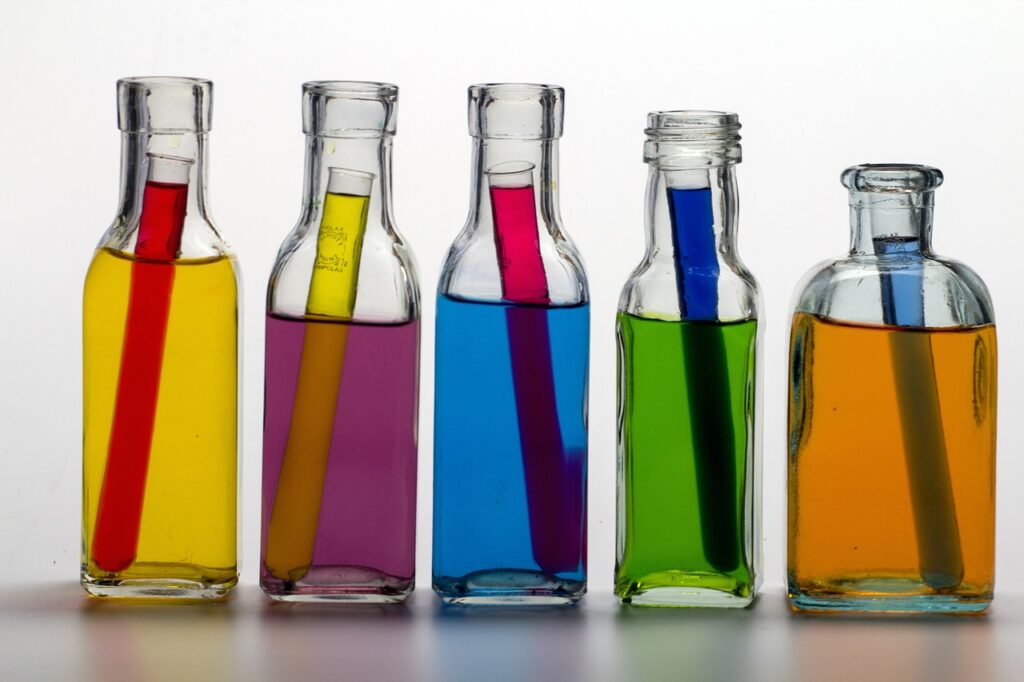
Initially, pH was measured using a special type of paper, known as litmus paper. The litmus test relied on Colorimetry and would indicate the pH based on the color of the paper after adding the solution.
However, currently in use are pH meters. Check out a detailed post on working, instrumentation, and calibration of a pH meter.
Biochemical buffers
If you have understood the instrumentation of a pH meter clearly, you would know the importance of buffers in the pH meter.
What are they? They are mixtures of weak acids or weak bases and their corresponding salts. It is also known as a conjugate acid-base pair.
A conjugate base is an acid that has lost its proton
A conjugate acid is a base that has gained a proton
Why do we need them?
- To maintain the stability of the pH value.
- To maintain consistent environments for biological experiments
- Required for Calibration
Common examples of buffers: Tris, Phosphate, HEPES
What will happen if you add acid to a buffer? When more H+ ions are added to the mixture containing a weak acid and its conjugate base, the equilibrium shifts to the left— Le Chatelier’s principle.
What will happen if you add a base to a buffer? The H+ ion concentration decreases, and the equilibrium shifts to the right- Le Chatelier’s principle.
Now that you have learnt about biochemical buffers, let’s find out how to select the right buffer for your assay.
Buffer Selection
You will be able to select the right buffer based on the following 4 parameters-
- pKa and pH- you should match the pKa (acid dissociation constant) and your desired pH for effective buffering.
- Biological compatibility-
- Ensure that your buffer is incompatible with cell membranes, else they may accumulate inside the cell.
- Ensure that the buffer doesn’t inhibit any enzymes and does not chelate essential ions like Ca2+, Mg2+.
- They should be zwitterionic and stable
- High solubility in water
The best choices of buffers are- HEPES, MOPS, and PIPES, which tick off all the parameters of a good buffer.
Another important point to be noted is that the temperature can affect a buffer’s pKa and pH.
Oxygen electrode
While pH measurement and buffering systems help maintain the chemical environment of a biochemical reaction, pH alone does not provide a complete picture of what is happening inside a biological system. Even in well-buffered systems with stable pH, metabolic reactions can vary significantly depending on oxygen availability. This is where oxygen electrodes become important analytical tools.
Thus, pH meters play a central role in monitoring and controlling biochemical systems. In addition to pH and oxygen electrodes, modern biochemistry also employs advanced analytical tools such as biosensors for highly specific biological detection (a post on biosensors coming soon.. stay tuned!)