

Scientists say mice demonstrate a CPR instinct, much like humans
Mouse gives CPR!? This was a bizarre headline on the news lately. Let’s see if it was true.
Cardiopulmonary Resuscitation is a life-saving technique, often the first instinct in an emergency. While we typically imagine a common man or a doctor performing CPR, researchers have witnessed something Jaw dropping. In this bizarre incident, a mouse was seen attempting to save it’s unconscious friend! Let’s dive deep and understand if it was the mouse’s instinct, it’s intelligence, or just a coincidence.
Compassion in the wild
In separate incidents, we can see different animals showing care-giving behaviors- Chimpanzees empathetic-ally touching their wounded peers, dolphins pushing it’s distressed mate ashore so it can breathe, and even elephants helping their relatives. There is a new addition to them now.
A heart-breaking attempt to rescue a friend
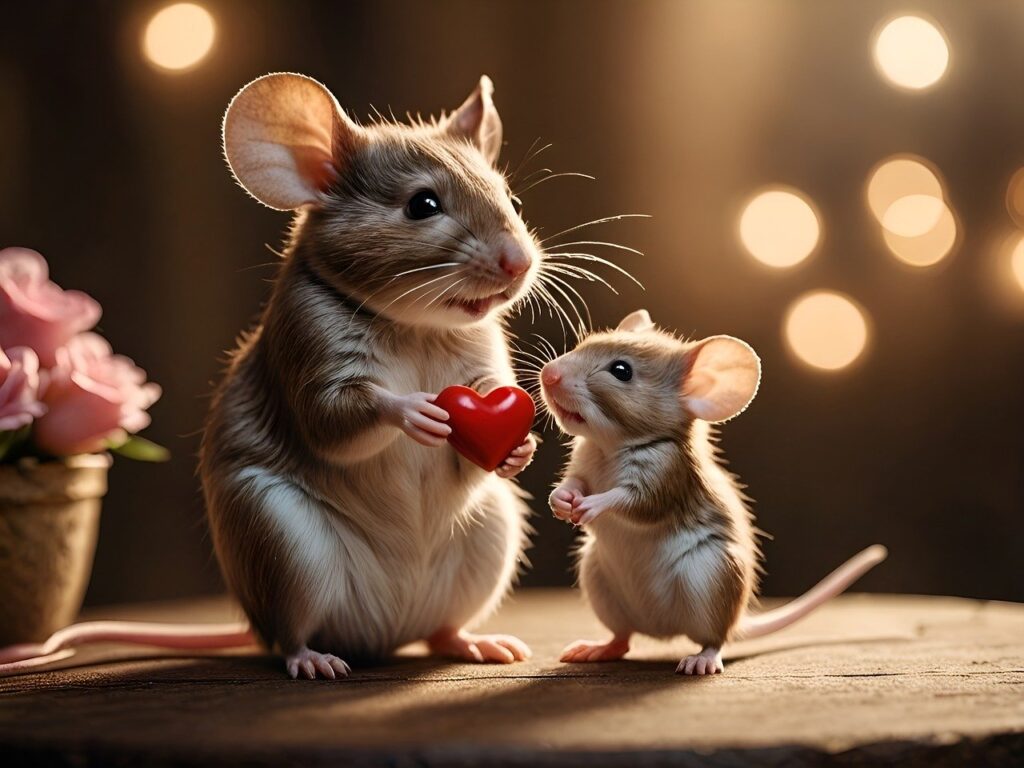
What a mouse did to it’s fellow cage mate who lay unconscious is heart-wrenching. The mouse tried everything to revive him- sniffed, paw at him, and even tried to bite him. But, when these didn’t work, the mouse even tried to pull aside their tongue to clear its airways!
Upon a close observation of the mice for over 13 minutes, scientists observed three kinds of behaviors when they found a anesthetized or unconscious friend in their cage:
- Sniffing- initially investigating it’s friend’s condition
- Grooming- licked and nudged it’s friend
- Physical reactions- pulling out the tongue to clear their obstructed airways. This happened in over 50 percent of the cases.
To clarify this behavior further, researchers placed a non toxic ball in the mouth of the mice, so as to mimic an obstructive airway. And in most cases, the rescue mouse almost instantly removed the object.
Are mice Altruistic? Probably yes!
While these are the behaviors of the rescue mice, the unconscious mice regained it’s consciousness and started to move and slowly walk. Upon seeing it’s friend move, the rescue mouse stopped caring. This shows this wasn’t a random but a goal-driven rescuer attempt. What is more interesting is that the carer mouse spent more time with the unconscious mice if they had known each other while compared to a stranger mice. This is truly a sign of altruism in mice and hints at a deeper social bond.
They also found that their neurons secreted oxytocin, the love hormone in such cases. This incident makes us wonder if care-giving tendencies are present in animals too.
Innate or acquired behavior?
While researchers wondered if this could bean innate behavior or learn. Most believe the former. This is because these mice were hardly 2-3 months and have never seen anesthetized peers in their cage. This proves they instinctively try to protect their peers.
While this may not sound like a traditional CPR, it can be seen as an equivalent to slapping someone or wake someone up and help them breathe. Moreover, removing an obstructive object is a crucial part during a surgery. When a mice could do this, it is truly heart throbbing.
A groundbreaking discovery
This study is backed by three different experiments in three different labs, making it a robust and remarkable finding. While mice are often looked down upon as tiny creatures, such empathetic and complex behaviour might suggest we are underestimating them.
This discovery opens the door to fascinating questions about the depth of social bonds in the animal kingdom. If a tiny mouse can show compassion, what else might we be underestimating in the world of animals?
Fascinating read, thanks for sharing.