
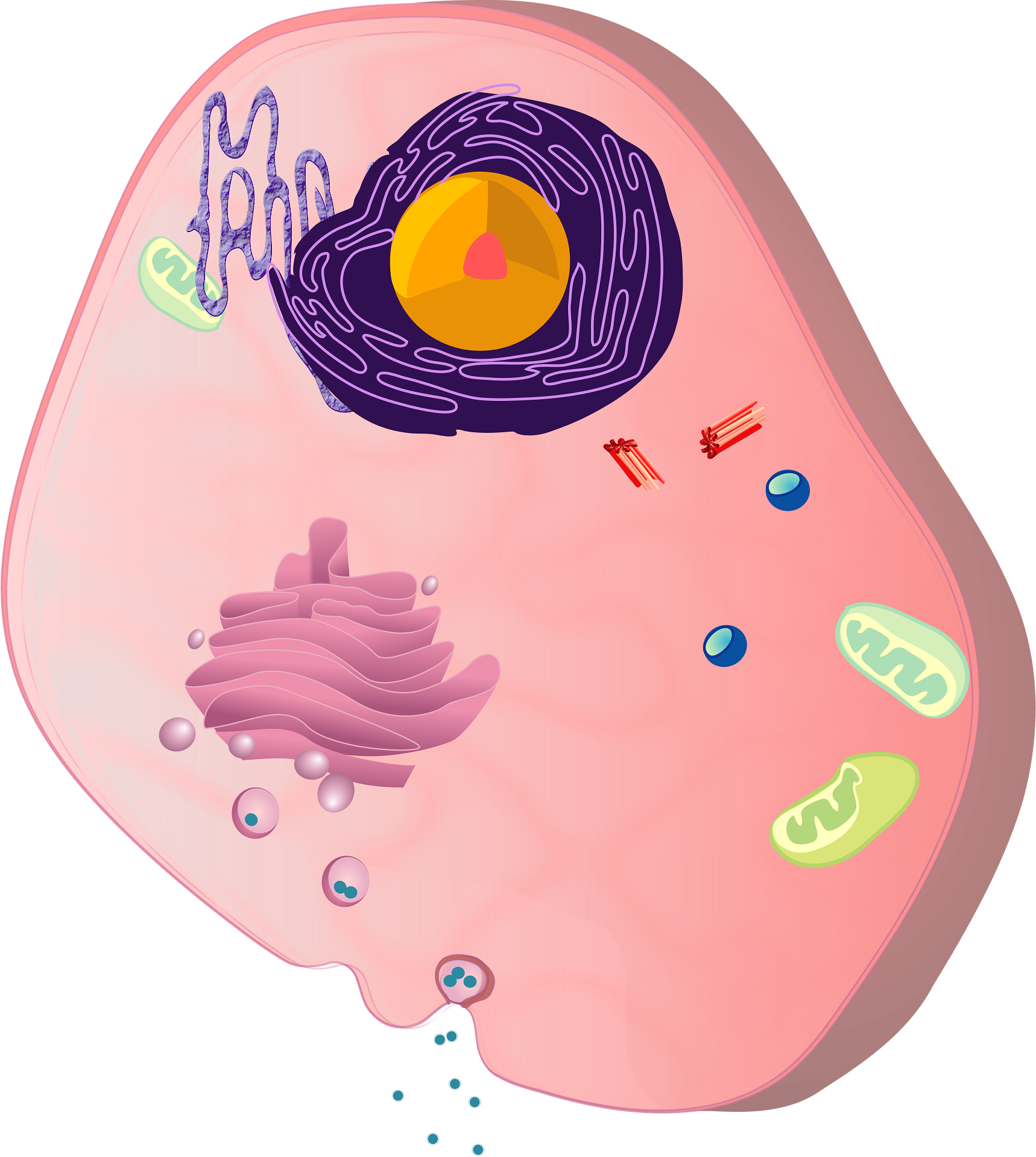
In the previous article, we explored the endoplasmic reticulum (ER), where proteins and lipids are synthesized.
Before a protein can perform its function, it often needs to be modified, sorted, packaged, and delivered to its correct destination. This important responsibility belongs to the Golgi apparatus, often called the Post Office of the Cell.
Just as a postal service receives parcels, labels them, sorts them according to their destination, and dispatches them to the correct address, the Golgi apparatus receives newly synthesized proteins from the ER, modifies them, and sends them to where they are needed- either inside or outside the cell.
How Do Proteins Reach the Golgi Apparatus?
Proteins synthesized in the rough endoplasmic reticulum (RER) are packed into small transport vesicles.
These vesicles travel through the ER-Golgi Intermediate Compartment (ERGIC) before reaching the Golgi apparatus.
Once inside the Golgi, proteins undergo further processing and are sorted according to their final destination.
Some proteins are sent to:
- Lysosomes
- Plasma membrane
- Secretory vesicles
- Other cellular compartments
Certain proteins, such as hormones, digestive enzymes, and antibodies, are packaged into secretory vesicles and released outside the cell through exocytosis.
Structure of the Golgi Apparatus
The Golgi apparatus consists of a series of flattened, membrane-bound sacs called cisternae.
These cisternae are surrounded by numerous transport vesicles that continuously deliver and carry proteins.
One of the most unique features of the Golgi apparatus is its polarity. Each side of the organelle performs a different function.
The Three Functional Regions of the Golgi Apparatus
1. Cis Face (Receiving Face)
The cis face is the entry point of the Golgi apparatus.
- Faces the nucleus and the endoplasmic reticulum
- Receives transport vesicles carrying newly synthesized proteins
2. Medial Golgi
The proteins move through the middle cisternae, where they undergo several chemical modifications.
These modifications include:
- Removal of certain sugar molecules
- Addition of new carbohydrate groups
- Formation of mature glycoproteins
These changes ensure that proteins become fully functional and ready for their specific roles.
3. Trans Face (Shipping Face)
The trans face lies opposite the cis face and faces the plasma membrane.
This is where proteins are:
- Sorted according to their destination
- Packaged into vesicles
- Dispatched to different parts of the cell or secreted outside
For this reason, the trans face is often called the shipping department of the Golgi apparatus.
Protein Modification in the Golgi Apparatus
One of the Golgi apparatus’ most important functions is the modification of glycoproteins.
Many proteins receive carbohydrate chains while they are being synthesized in the rough ER. However, these carbohydrate chains are still incomplete and require further processing in the Golgi.
What Happens in the Endoplasmic Reticulum?
During protein synthesis in the rough ER:
- A large oligosaccharide containing 14 sugar residues is attached to newly synthesized proteins.
- Some glucose and mannose residues are removed before the proteins leave the ER.
What Happens in the Golgi Apparatus?
As proteins move from the cis to the trans Golgi, the carbohydrate chains are gradually modified.
These modifications include:
- Removal of additional mannose residues
- Addition of N-acetylglucosamine
- Addition of fucose
- Addition of galactoseAddition of sialic acid
These changes produce mature glycoproteins that are essential for cell recognition, signalling, stability, and transport
How Are Lysosomal Proteins Different?
Proteins destined for lysosomes are given a unique molecular tag called mannose-6-phosphate (M6P). This tag functions like a postal address.
Special mannose-6-phosphate receptors in the trans Golgi recognize this tag and direct these proteins specifically to lysosomes.
Without this sorting signal, lysosomal enzymes would be secreted outside the cell instead of reaching lysosomes.
Types of Golgi Vesicles
The Golgi apparatus contains different types of vesicles that help transport materials.
1. Transitional Vesicles
- Bud from the rough ER
- Carry newly synthesized proteins to the cis face of the Golgi
2. Secretory Vesicles
- Form at the trans face
- Carry proteins to the plasma membrane for secretion through exocytosis
3. Clathrin-Coated Vesicles
- Covered by the protein clathrin
- Transport proteins between the Golgi, endosomes, and lysosomes
- Play an important role in intracellular trafficking
Functions of the Golgi Apparatus
- Protein Processing and Sorting: The Golgi modifies proteins and directs them to their correct intracellular or extracellular destinations.
- Glycoprotein Formation: The Golgi adds carbohydrate groups to proteins, producing mature glycoproteins required for cell communication and recognition.
- Packaging and Secretion: Proteins are packaged into secretory vesicles and released outside the cell through exocytosis.
- Lysosome Formation: The Golgi packages hydrolytic enzymes into vesicles that later develop into lysosomes.
- Lipid Transport: The Golgi modifies, packages, and transports lipids synthesized in the smooth ER.
- Storage of Secretory Products: Proteins and lipids may be temporarily stored in Golgi vesicles before being released when needed.
- Acrosome Formation: During sperm development, the Golgi apparatus forms the acrosome, a cap-like structure containing enzymes that help sperm penetrate the egg during fertilization.
- Plant Cell Wall Formation: In plant cells, the Golgi synthesizes and packages important cell wall components such as Pectin, Hemicellulose, and Other polysaccharides
Why is the Golgi Apparatus Called the Cell’s Post Office?
The Golgi apparatus performs four essential tasks:
- Receives proteins from the ER.
- Modifies them by adding or removing chemical groups.
- Sorts them according to their destination.
- Packages and dispatches them in vesicles.
Without the Golgi apparatus, proteins would never reach the correct location, causing cellular functions to fail.
Rough ER and Golgi Apparatus: Working Together
| Rough Endoplasmic Reticulum | Golgi Apparatus |
|---|---|
| Synthesizes proteins | Modifies proteins |
| Folds proteins | Sorts proteins |
| Performs initial glycosylation | Completes glycosylation |
| Packages proteins into transport vesicles | Packages proteins into secretory vesicles |
| Sends proteins to the Golgi | Sends proteins to their final destination |
Together, the endoplasmic reticulum and Golgi apparatus form the cell’s highly coordinated manufacturing and delivery system, ensuring that every protein reaches the right place at the right time.
Thanks for sharing!