
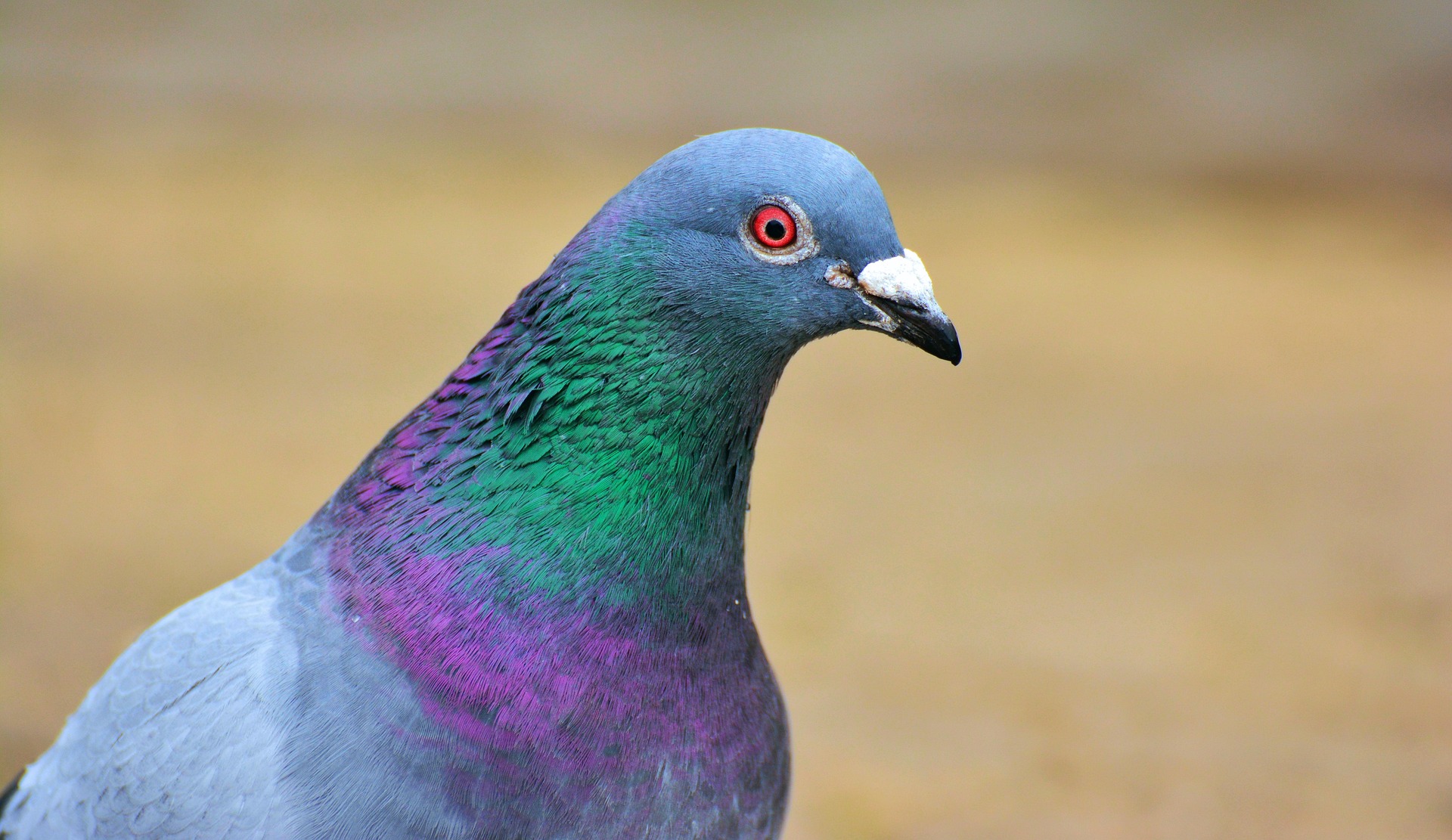
A homing pigeon can be released hundreds of kilometers away in unfamiliar territory and still find its way home- Sometimes on cloudy days..Sometimes over landscapes it has never seen before. How does it do it?
The answer isn’t one superpower. It’s a collection of biological tools that work together like a living GPS.
Before seeing how they navigate their way back home, it is important to note that- Not all pigeons will find their way back if lost. There are two types of pigeons-
- Normal pigeons: they are called feral pigeons. They have basic navigation skills- 20to 30% less accurate than their homing counterparts.
- Homing pigeons: they have been selectively bred for several generations to posessess incredible navigational skills, athletism, and a strong drive to return to their home. They have larger hippocampus (the brain region responsible for spatial memory). Their streamlined bodies, stronger and longer wings and powerful chest muscles help them sustain long flights.
Homing pigeons use a combination of mechanisms to navigate:
- Biological compass
- Magnetoreception- their biological GPS: Evidence suggests pigeons may perceive magnetic information as a visual pattern through light-sensitive proteins called cryptochromes.. They help them predict which is north or south direction even on a cloudy weather. It involves a protein cryptochrome 4 found in the pigeon’s retina. When light hits this protein, it triggers an electron transfer cascade. It creates radical pairs which are magnetically sensitive. Between 2024 and 2025, the structural changes involved in the cryptochrome 4 was studied, helping us understand this protein better. Long story short, these radical pairs act as a compass allowing them to literally see the earth’s magnetic field.
- Sun compass- they use the position of the sun and adjust for time of the day using their internal clocks to determine direction.
- Magnetoreception- their biological GPS: Evidence suggests pigeons may perceive magnetic information as a visual pattern through light-sensitive proteins called cryptochromes.. They help them predict which is north or south direction even on a cloudy weather. It involves a protein cryptochrome 4 found in the pigeon’s retina. When light hits this protein, it triggers an electron transfer cascade. It creates radical pairs which are magnetically sensitive. Between 2024 and 2025, the structural changes involved in the cryptochrome 4 was studied, helping us understand this protein better. Long story short, these radical pairs act as a compass allowing them to literally see the earth’s magnetic field.
- Biological map
- Olfactory and Auditory maps- they can smell their way back home by recognising familiar smells. When these olfactory maps were blocked, the pigeons became severely disoriented, they can remember the smell of vegetation, water and soil near their home. Based on how much the smell changes, they can keep track of how far they have come from home or how long they have to fly to reach home. But this is just a rough compass. They also have excellent hearing sensitivity. They can hear sounds in the ranges of 1 kHz to 4 kHz.
- Visual cues- they rely on visual landmarks like certain buildings, rivers, highways and build a mental map of their surroundings. So if there is a monotonous landscape then this sense is weaker.
- Infrasound- they can detect low frequency acoustic waves caused by natural phenomena like ocean waves or wind patterns.
- Their beaks- the presence of trigeminal nerve in their beak helps them with the map sense and compass sense.
- Olfactory and Auditory maps- they can smell their way back home by recognising familiar smells. When these olfactory maps were blocked, the pigeons became severely disoriented, they can remember the smell of vegetation, water and soil near their home. Based on how much the smell changes, they can keep track of how far they have come from home or how long they have to fly to reach home. But this is just a rough compass. They also have excellent hearing sensitivity. They can hear sounds in the ranges of 1 kHz to 4 kHz.
And with experience, they can adjust well by saving their energy and making their flight quick. They will avoid zones with lots of predators and other harmful conditions.
And if one of these senses are impaired, the rest step in. So they are redundant. 4 components are very relevant- olfactory, magnetic, sun compass, and the training they get initially. [homing pigeons are initially trained.. that is why normal pigeons cannot fly back home].
New organ involved
This is what we know till now. But things get really interesting. In a very recent study published by the Max plank institute of animal behavior, the secret to a pigeon’s navigation system is the iron filled immune cells in their liver. Without these cells, they struggled to find their way back home on an overcast day, which shows they heavily rely on the earth’s magnetic field.
Specialized cells in the pigeons immune system called macrophages accumulate iron while breaking down old red blood cells. The iron gives the cells unique magnetic properties that help them respond to the planet’s magnetic field.
They studied organs that might likely be involved in magenetoreception- eyes, beaks, brain, liver, spleen and liver was the highest. Iron is crystallized in oxide nanoparticles making them superparamagnetic. This way they could react to the earth’s magnetic field.
Pigeons had been trained to return to their aviary from locations more than twenty kilometers away. Scientists removed the liver macrophages and monitored how the birds performed.
The results depended on the weather. On overcast days, when the sun was hidden, pigeons that lacked the macrophages lost their sense of direction and had difficulty navigating home. On sunny days, however, they successfully returned, likely relying on the sun as a navigational cue instead of Earth’s magnetic field.
These findings suggest that birds use magnetic information alongside solar cues to orient themselves during flight.
The mystery doesn’t end
Now, even if the magnetic signals were present in the liver, how did they reach the brain? Because unless the brain gets the signal, the pigeon cannot act. They used electron microscopy and they observed that the iron rich macrophages were in close proximity to the nerve cells. This was the first concrete evidence for magnetoreception.
Scientists may finally have identified magnetic sensors in the liver, but one major question remains. How does this information reach the brain and become a navigational decision? We now know more about how pigeons find their way home than ever before. But the final step of the journey remains one of biology’s most intriguing mysteries.
Let me know in the comments what you think about pigeon’s astounding navigation system.