

In Part 1, we explored a hidden world of marine snow, resilient microorganisms thriving in extreme environments, and ecosystems that keep our planet in balance.
But what happens in the ocean doesn’t stay in the ocean. From the seafood on your plate to the molecules shaping future medicine, these invisible shifts are already influencing our lives.
In this next part, we’ll explore how the ocean reaches out to us through the food we eat, the microbes that sustain ecosystems, and the compounds that may potentially transform human health.
Let’s start with the most immediate connection:
Through the food we eat.
We often hear about microplastics harming marine life. But here’s the bitter truth: the problem started with us… and now, it’s coming back to us. [yes, karma is a boomerang]
From headlines blaring microplastics in human blood, ovaries, and even breast milk, to their presence in our favorite seafood, the boundary between ocean pollution and human health is disappearing.
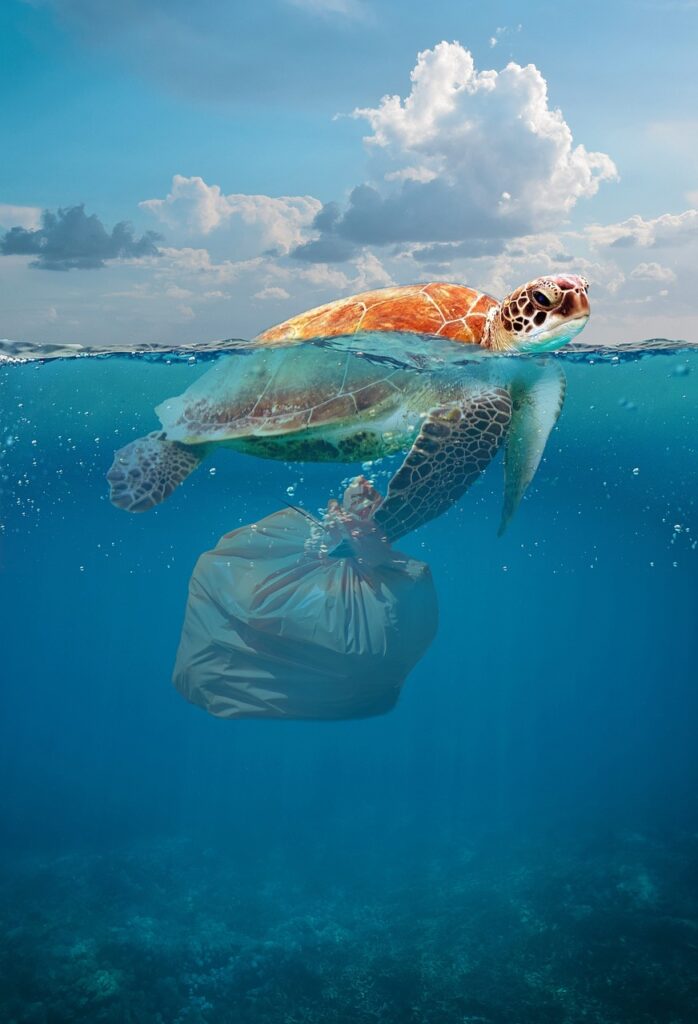
And it doesn’t stop at microplastics– Industrial pollutants, heavy metals, and pathogenic microorganisms are accumulating in marine ecosystems, disrupting biodiversity and compromising seafood safety.
What begins as trace amounts in water gradually builds up across the food chain. By the time it reaches our plates, these contaminants are no longer insignificant. They are magnified.
Perhaps, in trying to solve this problem, we also need to pay closer attention to what the ocean has been telling us all along.
But not all changes in the ocean are destructive. Some are subtle shifts that can quietly reshape entire ecosystems.
How global warming affects the oceans

Yes.. Global warming doesn’t just affect us. It also affects the most abundant organisms in the ocean- ammonia-oxidizing archaea (AOA). These tiny microbes play a crucial role in the marine nitrogen cycle.
Their growth and activity are strongly influenced by temperature and the availability of trace metals like iron. Interestingly, in a particular species, Nitrosopumilus maritimus, even a 5°C increase was found to reduce its iron requirements by over 80%, allowing it to thrive even in iron-limited conditions. At the molecular level, this shift is accompanied by changes in electron transport proteins, helping the organism adapt to both warming and nutrient stress.
While this might seem like a small adjustment, it has much larger implications. As these microbes become more efficient and competitive, they can alter how nitrogen is cycled in the ocean, eventually affecting marine ecosystems.
While these changes reshape ecosystems, the ocean also offers something remarkable: molecules with the potential to transform human health.
Ocean-derived bioactive compounds for anti-ageing

Ageing is a complex, multifactorial process driven by cellular damage, chronic inflammation, and diminishing repair mechanisms. Although life expectancy has increased significantly over the decades, age-related conditions such as Alzheimer’s and Parkinson’s disease remain a growing concern.
While we look for solutions, marine-derived bioactive compounds are emerging as promising candidates amidst anti-ageing creams. They are extracted from organisms like algae and other marine life. They show strong antioxidant and anti-inflammatory properties in preclinical studies. Most importantly, they appear to act on key biological pathways associated with ageing , such as genomic stability, cellular senescence, and chronic inflammation.
Recent research highlights their potential not only to extend lifespan but also to target multiple age-related diseases, including neurodegenerative, cardiovascular, metabolic, and even certain cancers.
While we are still far from translating these findings into everyday therapies, the ocean is steadily revealing itself as a powerful source of future anti-ageing strategies.
Talking of promising compounds, some stand out for their potential in tackling complex diseases like cancer.
Renieramycin and Its Anticancer Potential
One such example is Renieramycin, first identified in 1982 from a marine sponge. Despite being present only in trace amounts, it has attracted significant attention as a potential anticancer agent due to its unique chemical structure.
Over time, researchers have worked to overcome challenges related to its chemical stability and large-scale production, including efforts in total synthesis. These advances have made it easier to study and explore its therapeutic potential.
While still under investigation, Renieramycin highlights how even rare marine molecules can open new avenues in drug discovery.
The ocean may seem vast and distant, but its influence reaches far beyond its shores. From pollutants that make their way onto our plates to microscopic organisms reshaping global cycles, and even molecules that could define the future of medicine, the ocean is deeply connected to us.
What happens beneath the surface is not isolated. It is part of a larger, interconnected system that ultimately shapes our health, our environment, and our future.
Fascinating, thanks for sharing