

The desert terrain is an interesting landscape for animals to live in. With barely any water and strong gusty winds leading to the formation of sand dunes, it is almost impossible to thrive in such an environment. But, the ship of the desert, our dear camels have adapted to this tough conditions. In this post, we will not focus on camels (that is for another post!) but other unique desert animals who have adapted to this extreme weather. Each of these animals have amazing physiological adaptations to thrive in the harsh environment. Buckle up and dive deep into the fascinating world of desert fauna.
What do these animals eat?
Most animals survive on desert plants like cactus, or even insects which crawl on the ground. However, when the conditions become extreme, it becomes a necessity for these animals to scavenge on dead animals or carcasses.
Let’s look at the unique desert animals and their physiological adaptations
- Fennec Fox: the big eared royals
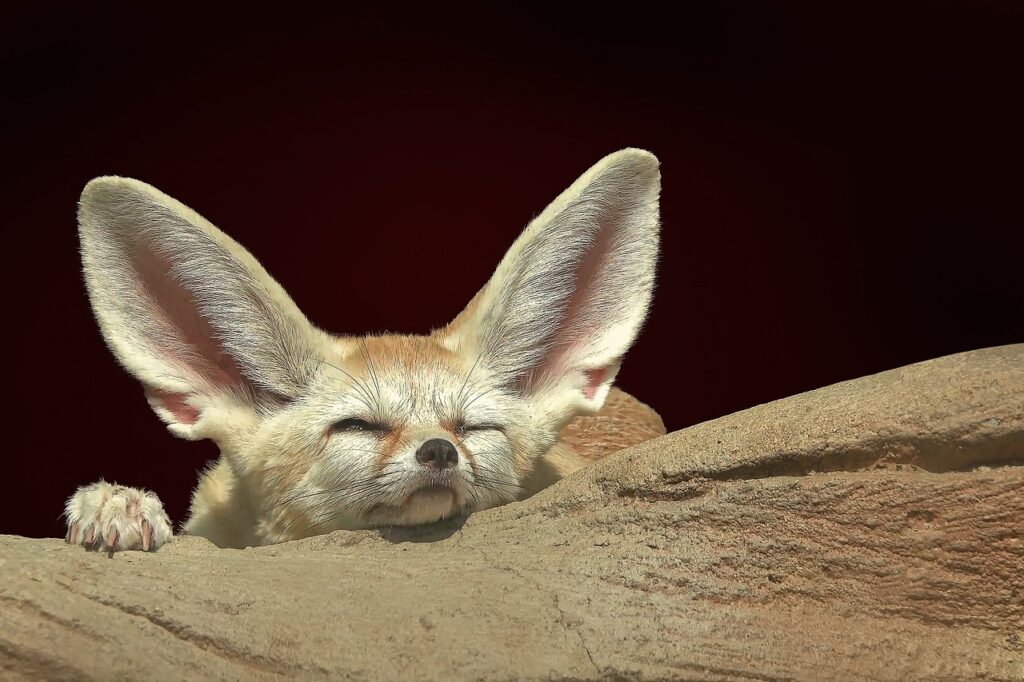
The smallest species (41 cm in length) of fox- known for it’s characteristic big ears (15 cm in length!) . The big ears help it cool down as the blood vessels close to the ear dissipate heat into the air. Apart from that, the big ears make them highly sensitive to hearing and helps them track down prey that is present underground. In addition, their thick fur can keep them warm at night when temperatures drop to below zero and their thick paws give the grip to walk on the hot sand. The most unique feature of this animal is it’s kidneys which can retain water.
- 2. Deathstalker Scorpion: the tiny but deadly stinger
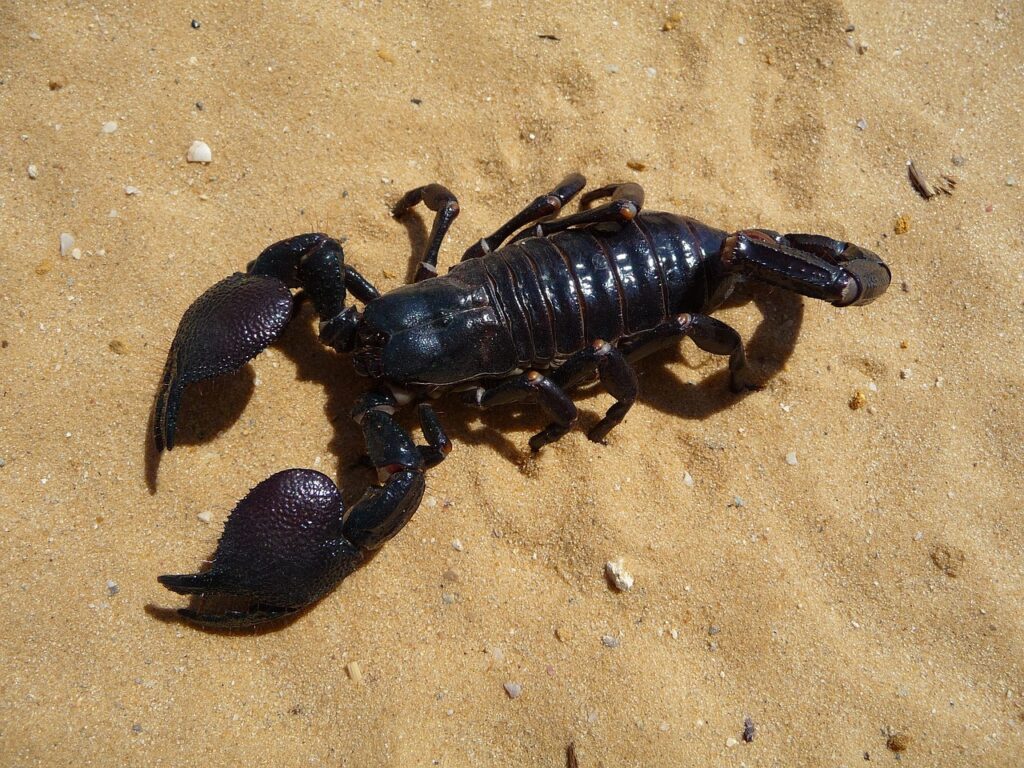
This venomous stinger and a nocturnal predator comes with a hard exoskeleton
They can survive on less food and water. The exoskeleton protects them from the heat and prevent water loss. They head out to hunt for food only during the night. As scary as the name sounds, it’s venom is the most dangerous poison out there and is extremely fatal. However, even this deadly poison can be put to good use as it is used to locate tumors in the human body.
- 3. Jebroas: the bouncy acrobats
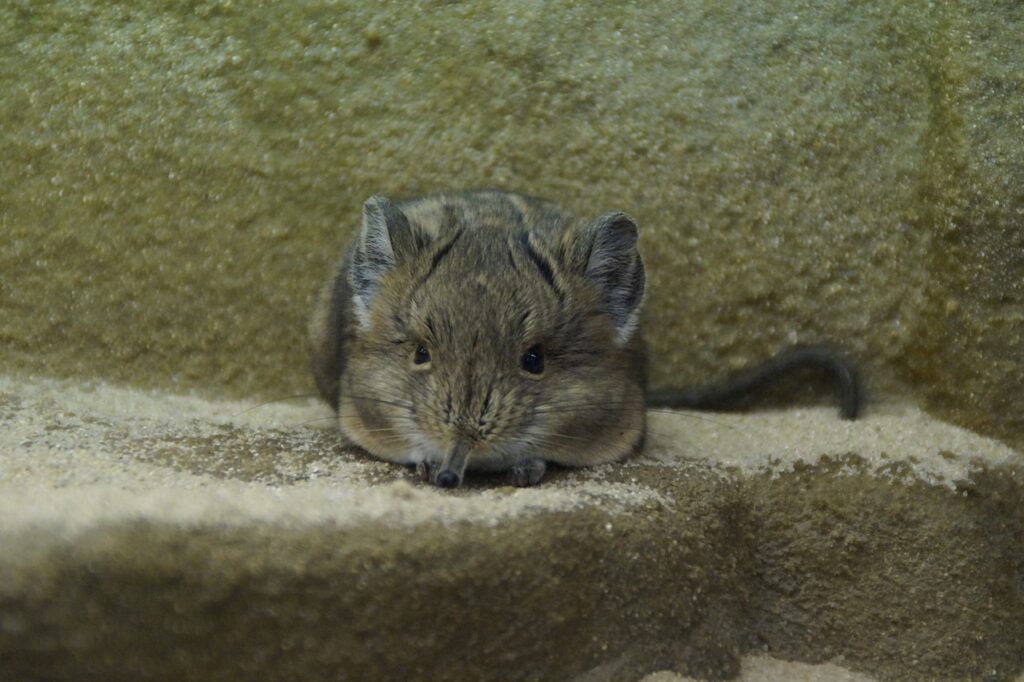
This kangaroo like animal has a long hind leg and a long tail. They also have fur-lined cheek pouches and fur-lined ears. With these physiological adaptations, they can survive without water for a very long time (even longer than camels)
The long tail and hind legs help it leap great distances while maintaining balance. They essentially move by hopping on the sand. The cheek pouches store food and the ears prevent sand from entering the body. The big bushy tails shelter them from the hot sun.
- 4. Addax: the ghostly antelope
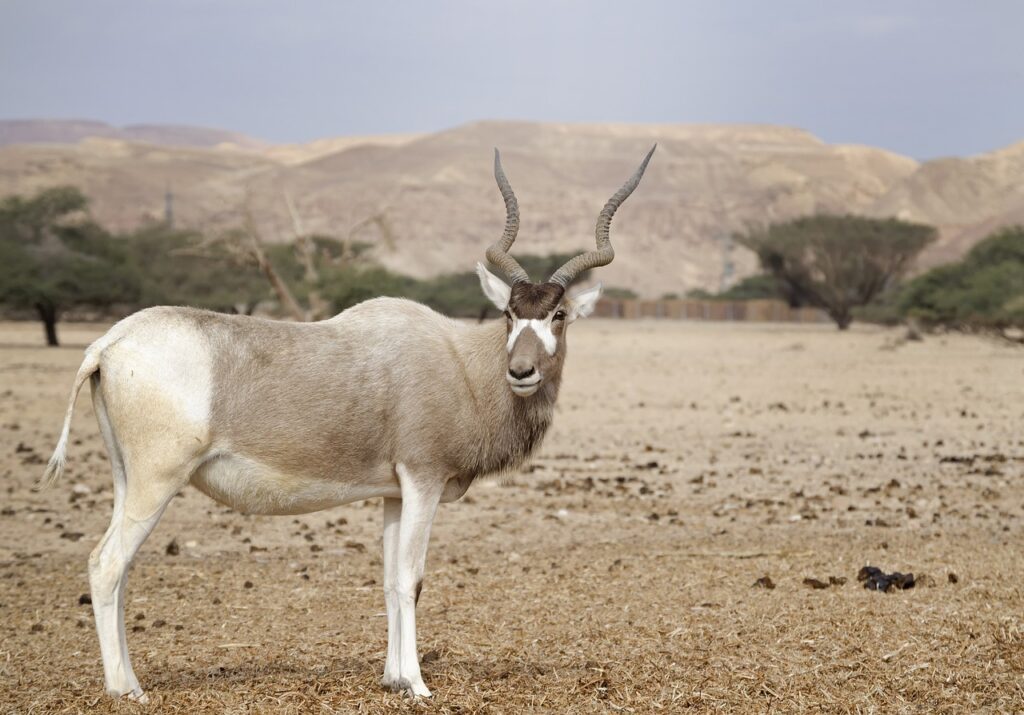
These giant mammoths weighing almost 150 kgs have broad flats hooves and flat soles. The broad soles prevent them from sinking into the sand. They also dig out depressions in the sand to keep them cool. However, the addax is in the critically endangered species list.
- 5. Saharan silver ant: the speedy survivor
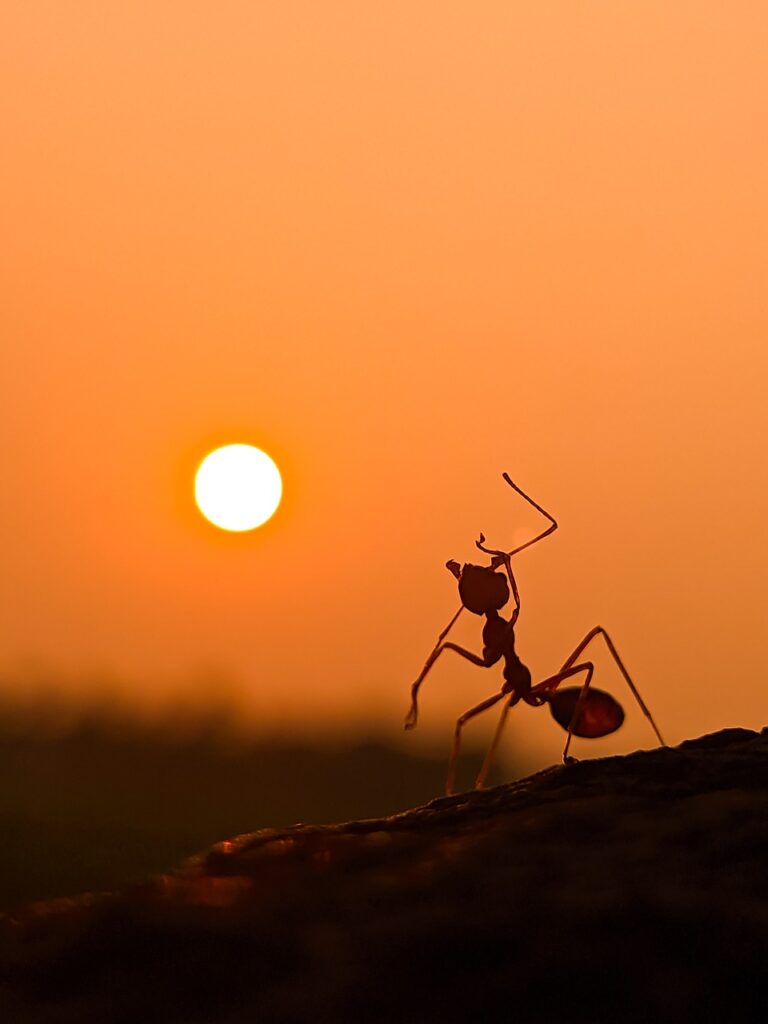
After seeing giant mammoths in the desert, let us meet the contrasting silver ants. The silvery appearance on their skin arise because of tiny hairs on their skin. It is a desert adaptation as they reflect the sunlight and help the ant cope with the extreme heat. Apart from their pearly white appearance, it’s long legs keep the ant away from the hot sand. Moreover, they walk on 4-6 legs thereby reducing the area of contact with the sand.
- 6. Jackrabbit: the fast and furious hopper
Being rabbits, these fast runners have large ears and long legs.
The large ears help them dissipate heat and long legs aid in effective movement across the sand dunes. They are pale in color and follow a predominantly vegetarian (herbivorous) diet feeding on desert plants like cacti.
- 7. Rattlesnake: the silent striker
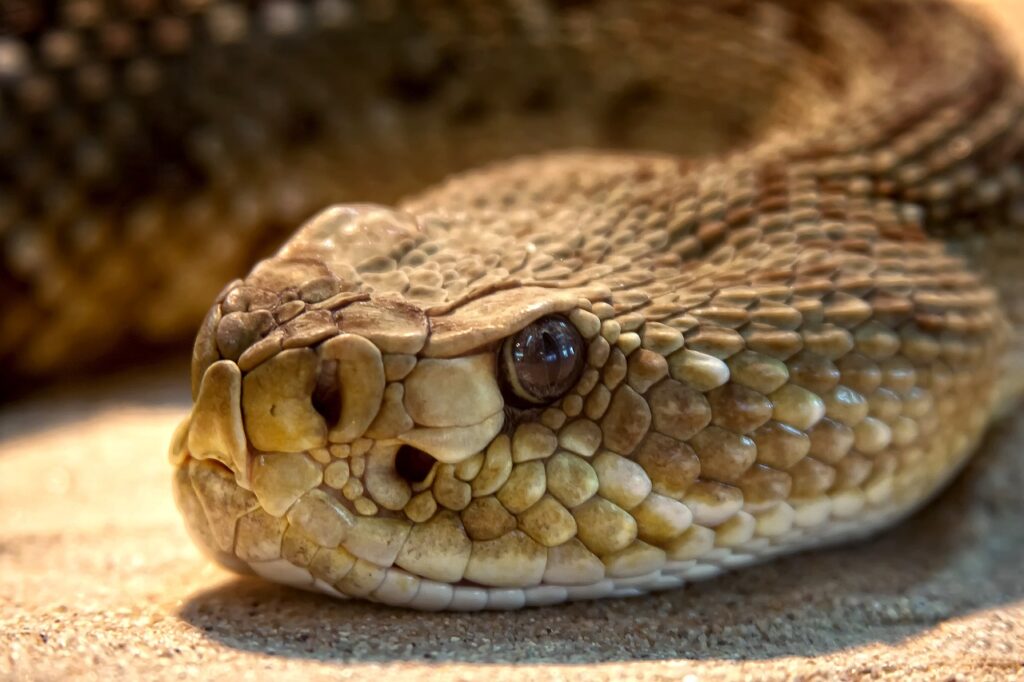
These venomous snakes can not just survive without water for a long time but also camoflauge to the desert environment. Interestingly, they have thermal sensors just above their eyes that can help them detect warm blooded prey. Their prey may be warm blooded but they themselves are very cold blooded that helps them stay cool in the scorching sun. Just like most desert animals, they also burrow in the sand to keep them cool and also escape predators.
- 8. Meerkats: the ultimate social butterflies of the desert
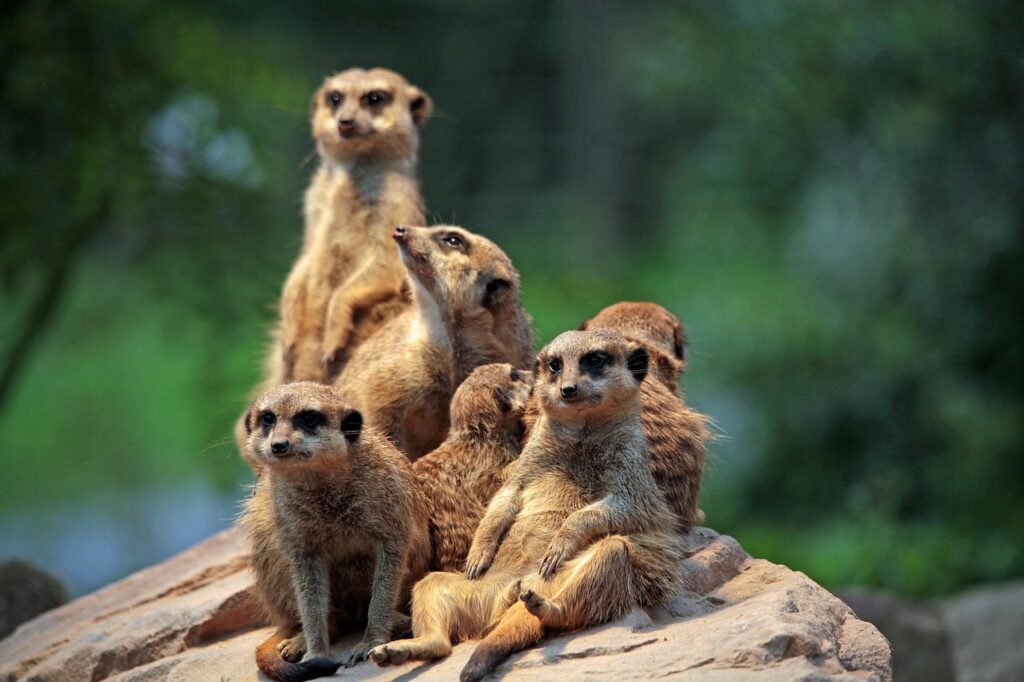
Just like monkeys, this group of small mammals are well known by their sociability. They live in small to large groups of 15-50. While most animals are asleep in their burrows during the day, they roam around in the deserts during the day. They believe in unity and adopt different roles so they can cover the entire desert. Being sociable, they believe in the concept of community and even help groom each other before leaving their burrows. Since they are a large group, communication is vital for them. They give sounds ranging from small chirps to loud barks to send signals to each other and protect their community.
- 9. Arabian oryx: the desert’s horned majesty
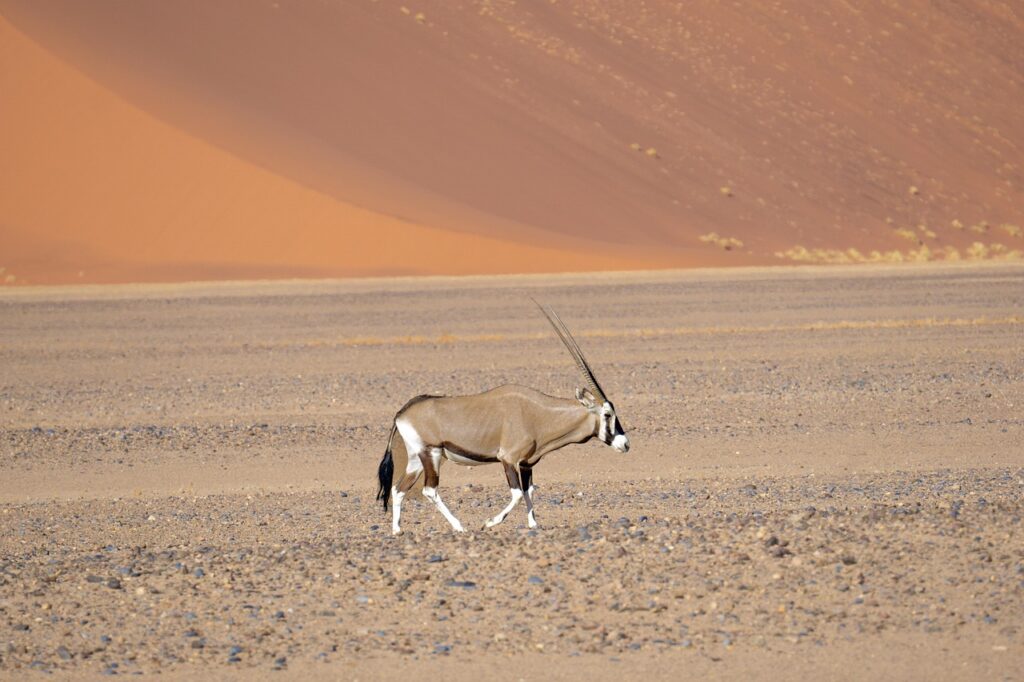
It is the smallest of all antelopes with a height of just one meter. Their characteristic features are their long straight horns which reach up-to 75 cm in length. Just like the addax, these creatures are also in the vulnerability list due to illegal hunting/ poaching.
- 10. Namib desert beetle: master of water harvesting
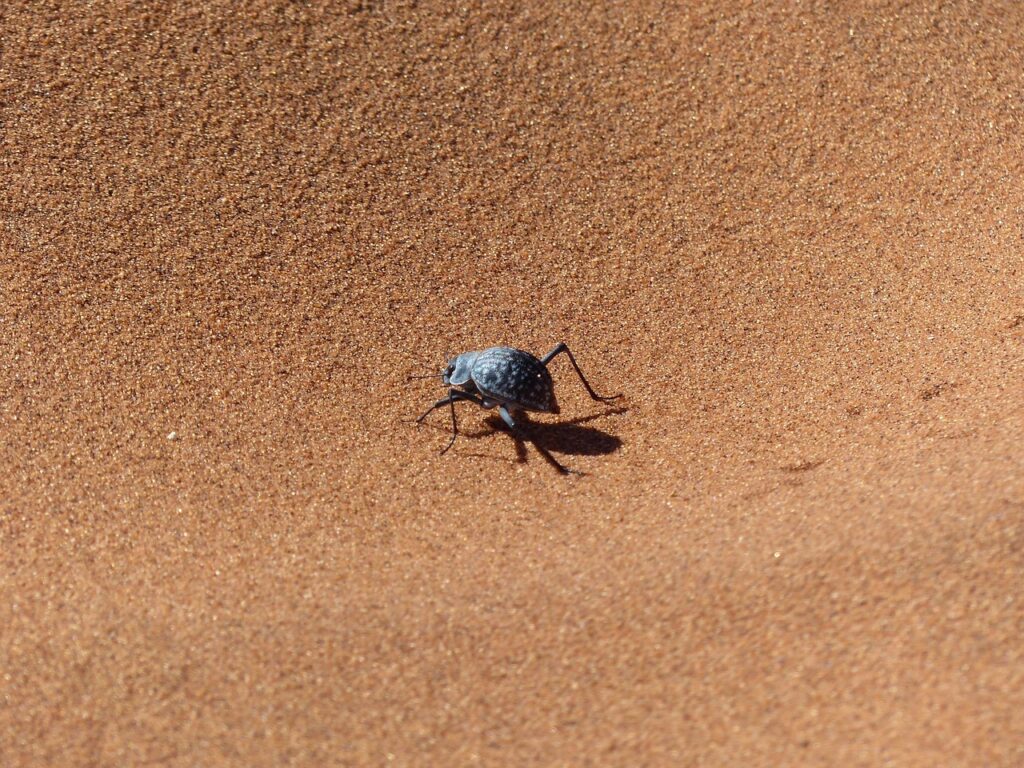
This tiny insect has been an inspiration to modern day researchers. Thanks to it’s modified wings specially adapted to the desert landscape, they can collect minute water droplets from the morning fog, which then percolates down through the beetle’s back and finally into it’s mouth. It’s water collecting abilities haven’t gone un-noticed as researchers are trying to apply this technique to collect water from dry and arid areas. We saw a similar animal in my previous post from it’s water collecting abilities, check it out here.
The desert is home to some of the most resilient and fascinating creatures on Earth, each uniquely adapted to survive in one of the harshest environments. From the clever water collectors like the Namib Desert Beetle to the social butterflies like the meerkats, these animals prove that life can thrive even in the most extreme conditions. The next time you think of the desert, remember it’s not just about sand and heat – it’s a world full of incredible life waiting to be discovered.
Fascinating, thanks for sharing