
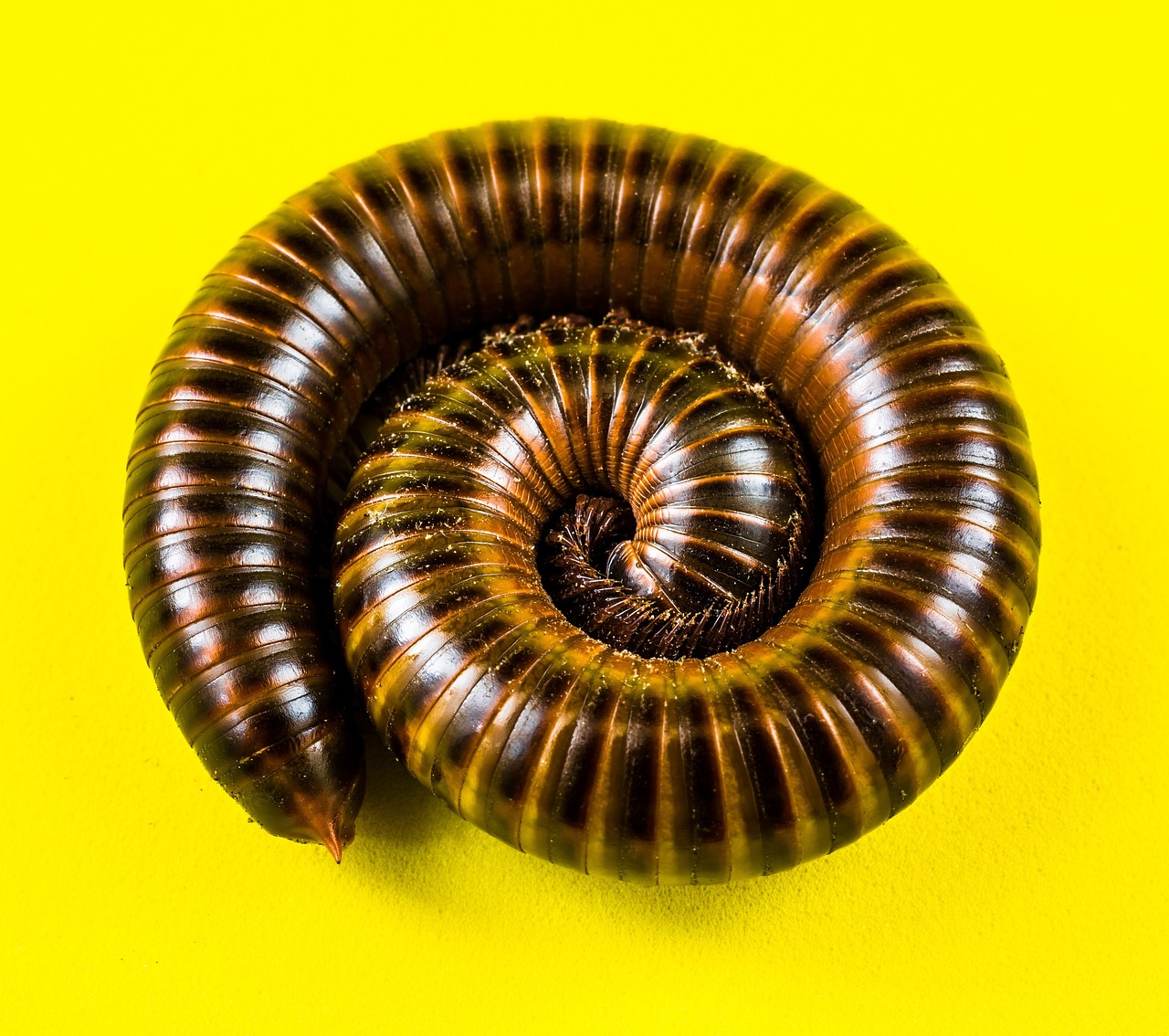
Millipede- who knew this harmless but scary-looking creature could one day cure your pain? Let’s find out.
Meet the millipede
Millipedes are worm-like garden pests and resemble their close cousins, the centipedes. They are Arthropods (yes, they share their group with cockroaches), having two pairs of jointed legs on all their body segments. Talking of segments, they may have them in any number between 20 and 100. You may mostly find them in your garden feeding on dead leaves and smaller insects. However, they may make their way into your homes, especially moist areas like bathrooms and kitchen sinks. While most of them are harmless, some can secrete hydrochloric acid for defense, which may irritate your skin. They dread tea-tree oil and peppermint oil. So, if you want to bid goodbye to a millipede that has invaded your house, these are your best bets.
Why is the millipede in the news lately?
These may look like creepy crawlers. However, they could potentially help us relieve pain. In a recent research at Virginia, scientists discovered alkaloid compounds in their defensive secretions. These complex molecules seem to make ants dizzy. The very same molecules are known to interact with pain receptors in humans. By decoding them, scientists can start working on innovative drug therapies to tackle pain. However, it does come with its challenge- How do we scale it up?
A millipede makes an ant dizzy.
In addition to secreting alkaloids for defense, they also produce them for warding off predators and sharing their current location with their kin.
Latest Discovery
Two scientists examined Ischnocentra plicata, a millipede in the Pacific Northwest. What they found was promising- the alkaloids selectively interacted with a neuroreceptor called Sigma 1. Interestingly, it is a therapeutic target for the treatment of neurodegenerative diseases. This interaction between alkaloids and sigma 1 could have potential pharmacological benefits, including pain reduction and treatment of neurological disorders.
Upon exploring further, they found that these alkaloids made their natural predators- ants feel dizzy. A subset of these compounds exhibits similar interactions with sigma-1.
Next steps
With promising drug-like compounds at hand, the next step would be to assess their efficacy and large-scale production. This might be especially challenging because they are very large compounds and may take some time to synthesize in a lab.
Nature truly inspires us.
Who knew a tiny, creepy crawly from our garden could inspire us to develop pain killers? Nature can truly teach us a lot.
Stay Curious, Stay Healthy
Happy reading!