
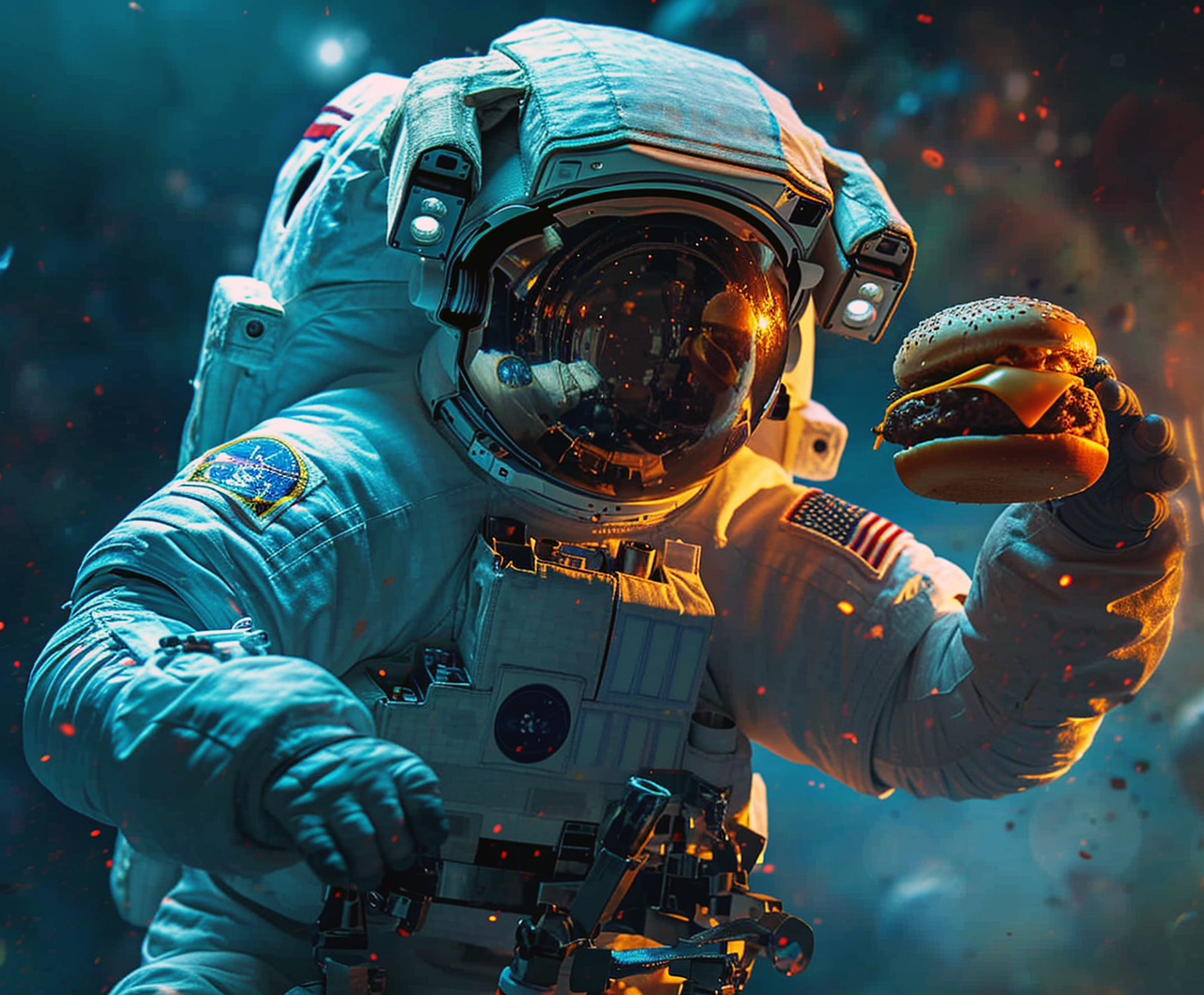
Sunita Williams, often seen effortlessly gliding through the International Space Station, is an astronaut familiar to most of us. What started as an 8-day space mission became an ordeal for two astronauts after they were stuck aboard for over nine months before they safely returned to Earth! Shocking visuals showing the “before” and “after” of Sunita Williams made us wonder if zero gravity could affect our bodies to this extent. How does our body change physiologically under the influence of zero gravity? Let’s ponder.
Sunita Williams has spent over 500 days in space across her missions, so her experiences provide valuable insights into the effects of prolonged weightlessness.


What can zero gravity do to your body?
Puffy face, chicken legs, and blurry vision are phrases scientists use to describe Sunita Williams while aboard. While they may sound unusual, let’s try to understand the profound effects of zero gravity on our physiology and the science behind them.
What happens while in space?
- Bloating and puffy face- while on earth, your body pulls blood and all the body fluids towards the lower part of the body, thanks to gravity. However, in space, with no gravity, you are weightless. Your body fluids and blood tend to rise making you look bloated and puffy-faced. The flow of fluids against gravity affects your sleep, blood pressure, and even eyesight. Astronauts adjust to the weightlessness in the initial hours through Space Adaptation Syndrome (SAS). While their vestibule systems are getting adjusted, they may experience dizziness, nausea, and headaches.
- Weak bones- your bones lose their density while you are in space. You will essentially not be using your limbs out there in space as you will be floating. For each month you are in space, you will lose 1% of your bone density. You can prevent this bone density loss by exercising and keeping active. In case you are wondering how you exercise out there, you have specialized machines. They resemble a treadmill and a stationary cycle on the ISS, and most astronauts work in space too. This loss in bone density not only affects the associated muscles (muscle atrophy) but also makes you prone to osteoporosis.
- A decline in vision- characterized by flattening of the eye and thickening of the retinal nerve fiber, space-associated neuro-ocular syndrome is one of the most uncomfortable changes your body can experience while in space. Furthermore, when the fluid accumulates in your eyes, it increases the intra-ocular pressure resulting in blurry vision.
- Lowered immunity- being in space changes your white blood cell behavior making you more susceptible to infections. They also affect the production of red blood cells resulting in space anemia.
- Affects cardiovascular system- when weightlessness affects almost all organ systems, the most important organ to be affected is your heart. Your heart no longer needs to pump blood against gravity nor does it have to supply blood to the limbs. In other words, your heart has to work less hard. Just like how your muscles and bones reduce strength to give atrophy, something similar happens with the heart too. This process will reduce your blood pressure.
- Risk of cancer- we are privileged to get protection from ionizing radiation. But, astronauts in the ISS are directly exposed to strong ionizing radiation from space, increasing their risk of developing cancer.
What happens after they are back on earth?
- Giddiness, nausea, and an unstable gait- astronauts often find it difficult to adapt to the effects of gravity after prolonged exposure to space. The same was naturally seen in Sunita Williams who needed help standing upright once she returned to earth.
- Baby feet- this happens to many astronauts. The thick part of their skin including soles becomes soft- more like a baby’s feet. This make it difficult for them to walk or stand.
- Balance- did you know you need ears for balance? Not exactly ears, but a tiny vestibular organ seated deep inside your ears. It senses gravity and sends the information to your brain. That is what keeps you from flying away while on Earth. However, after spending almost a year in space, it takes time before your vestibular organ can start functioning. So, the next time you see astronauts return to Earth and they struggle to balance, you know why.
- Orthostatic hypotension- astronauts who have just returned from space experience dizziness when standing up. This is due to the difference in gravity between Earth and space. They feel dizzy when they come to earth as the gravitational force is stronger on earth. Your heart finds it difficult to pump blood to the brain against gravity. While this is a natural phenomenon while you are on Earth, your body needs time to acclimatize to the Earth’s gravity after they have been in space for over 9 months.
The silver lining
Despite several negative effects of zero gravity on human physiology, there are a few aspects we can take inspiration from when it comes to zero gravity.
- The zero-gravity bed– although we have seen several problems arising from zero-gravity, many researchers have suggested zero-gravity beds to help you relax better and get a deeper sleep. It can help remove pressure from your muscles and joints placing your spine in a comfortable position for sleeping. Read this interesting article to know more.
- Spinal Expansion – Did you know to grow up to 2 inches taller in space due to reduced spinal compression? Imagine if we could harness this effect for medical benefits on Earth!

Let us take a moment to appreciate the efforts of astronauts and space scientists who have endured countless challenges—both mentally and physically—while dedicating themselves to space research. Their resilience and commitment bring us closer to understanding the vast unknown.
Sunita Williams’ journey back to Earth is a testament to both the strength of astronauts and the incredible adaptability of the human body. While zero gravity presents immense physiological challenges like muscle loss, vision changes, and balance issues, it also offers fascinating insights that could revolutionize medicine, rehabilitation, and even space exploration.
As we aim for deep-space missions to Mars and beyond, studying these effects will not only help astronauts survive in space but also unlock new possibilities for healthcare on Earth.
Happy reading, Happy exploring!
Good read and a trendy information at all levels in understanding lifestyle… Thanks…!!!
Good read and a trendy information at all levels in understanding lifestyle… Thanks…!!!
We know so much about space and yet we’ve barely scratched the surface
Absolutely! Space is vast, and every mission teaches us something new. Sunita Williams’ journey is just one example of how much we still have to explore—both out there and within our own bodies in microgravity. Who knows what discoveries await in the future?
Fascinating read, thanks for sharing.